
Last updated November 25, 2026
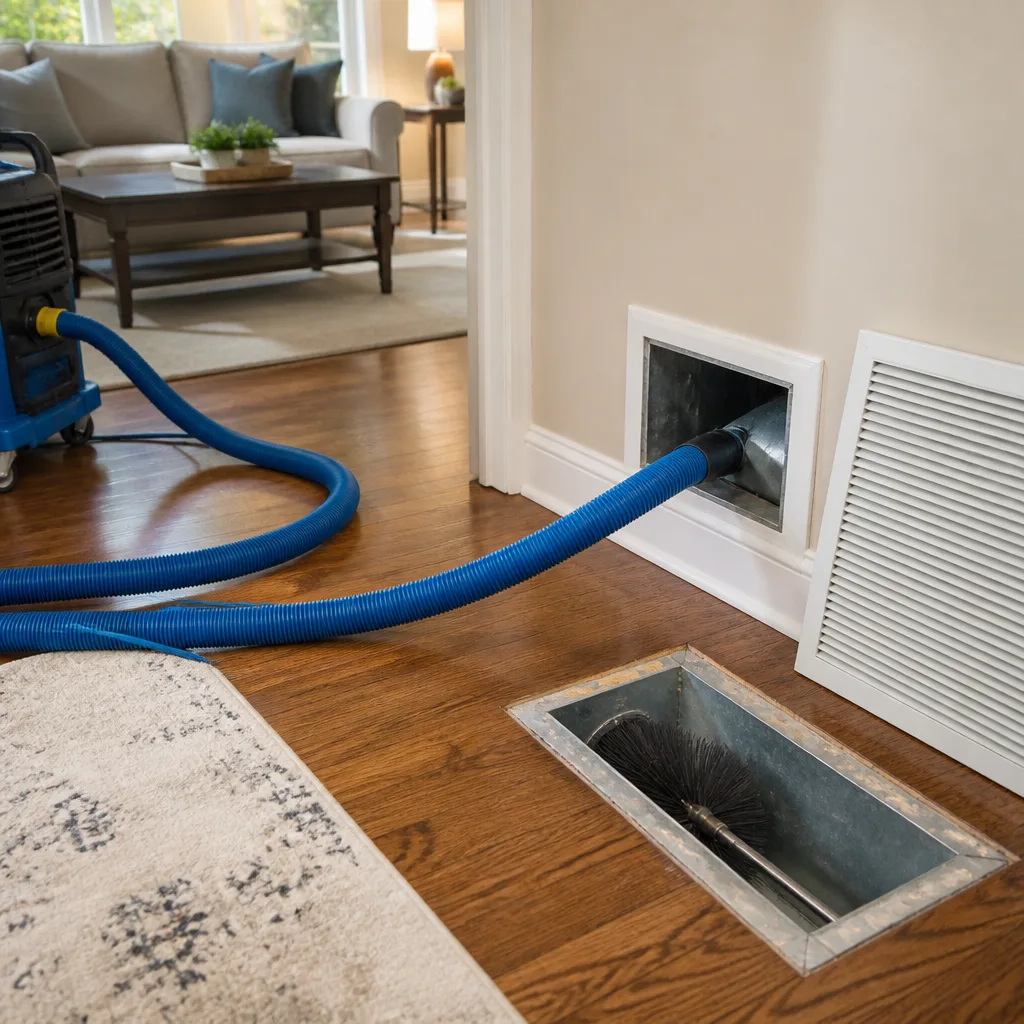 Whole-home duct cleaning
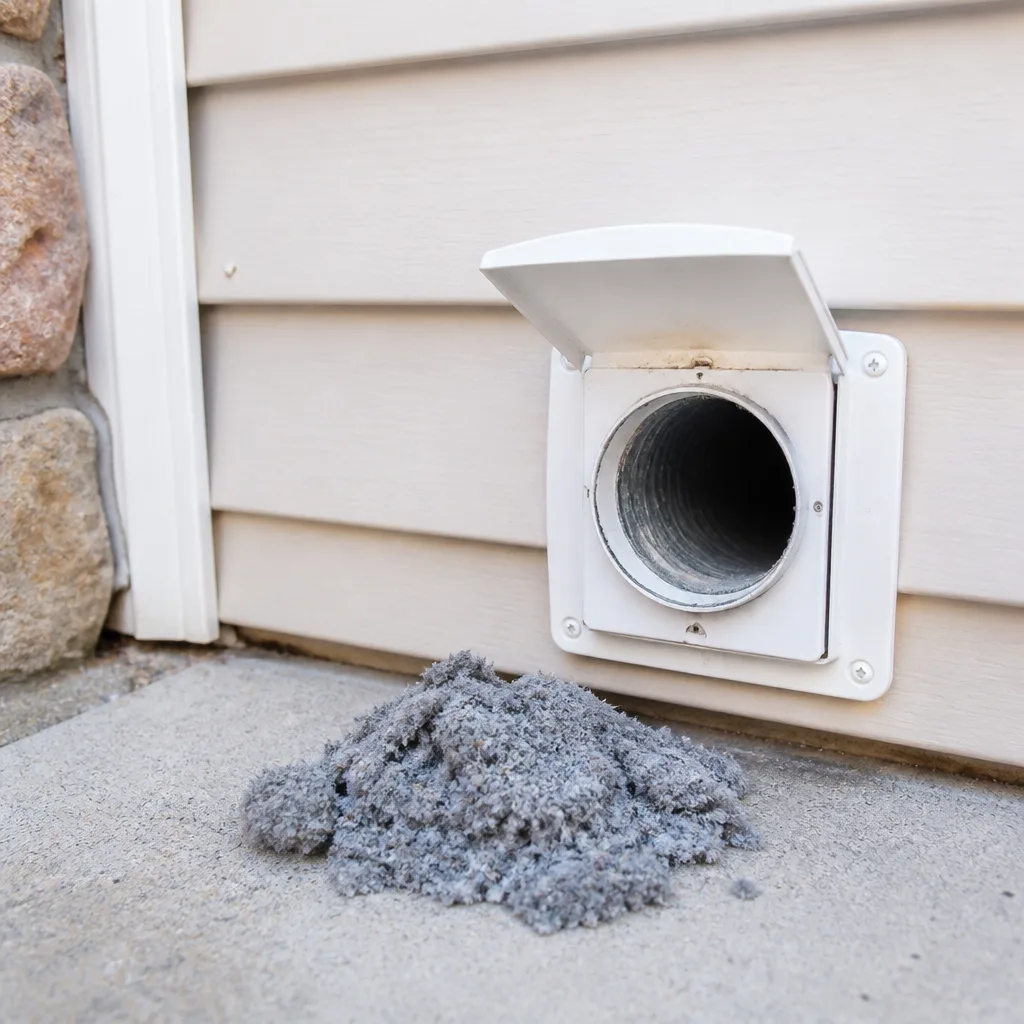 Dryer vent cleaning
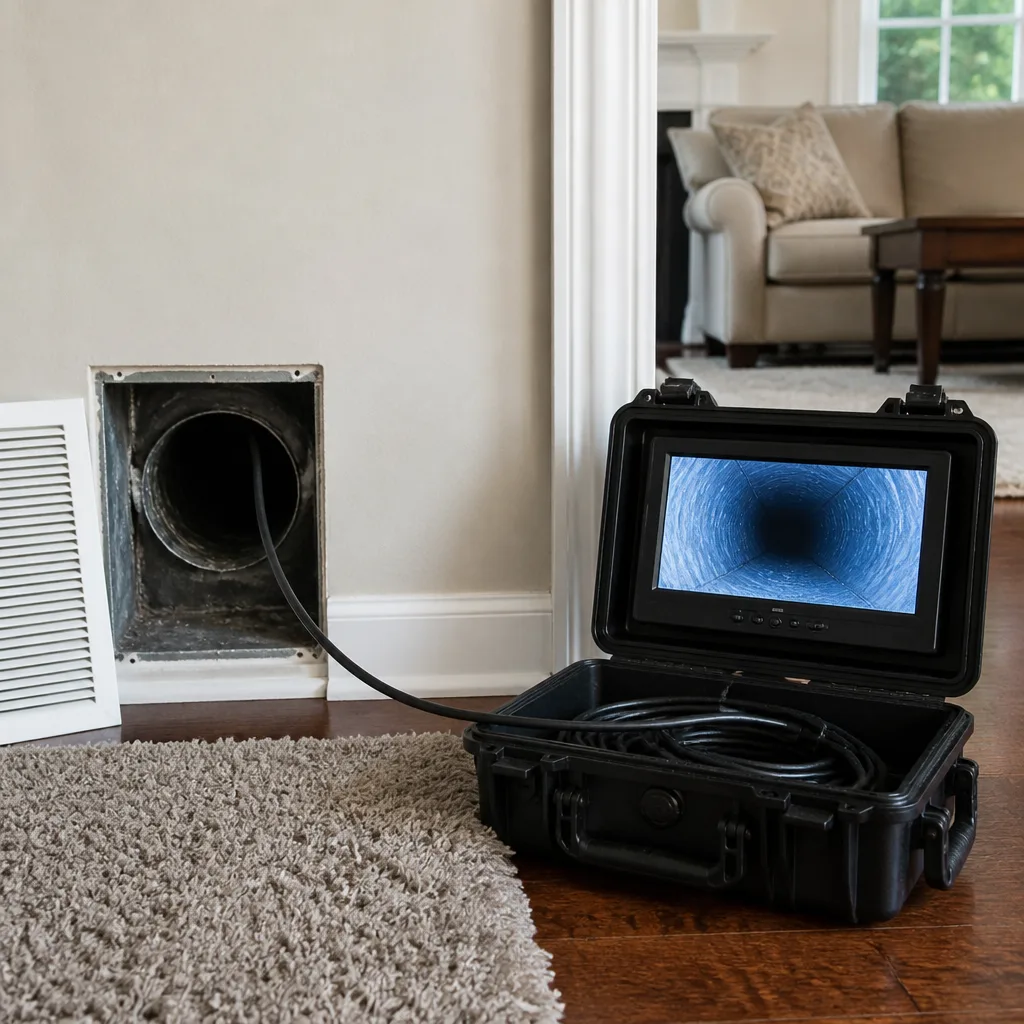 Camera inspection
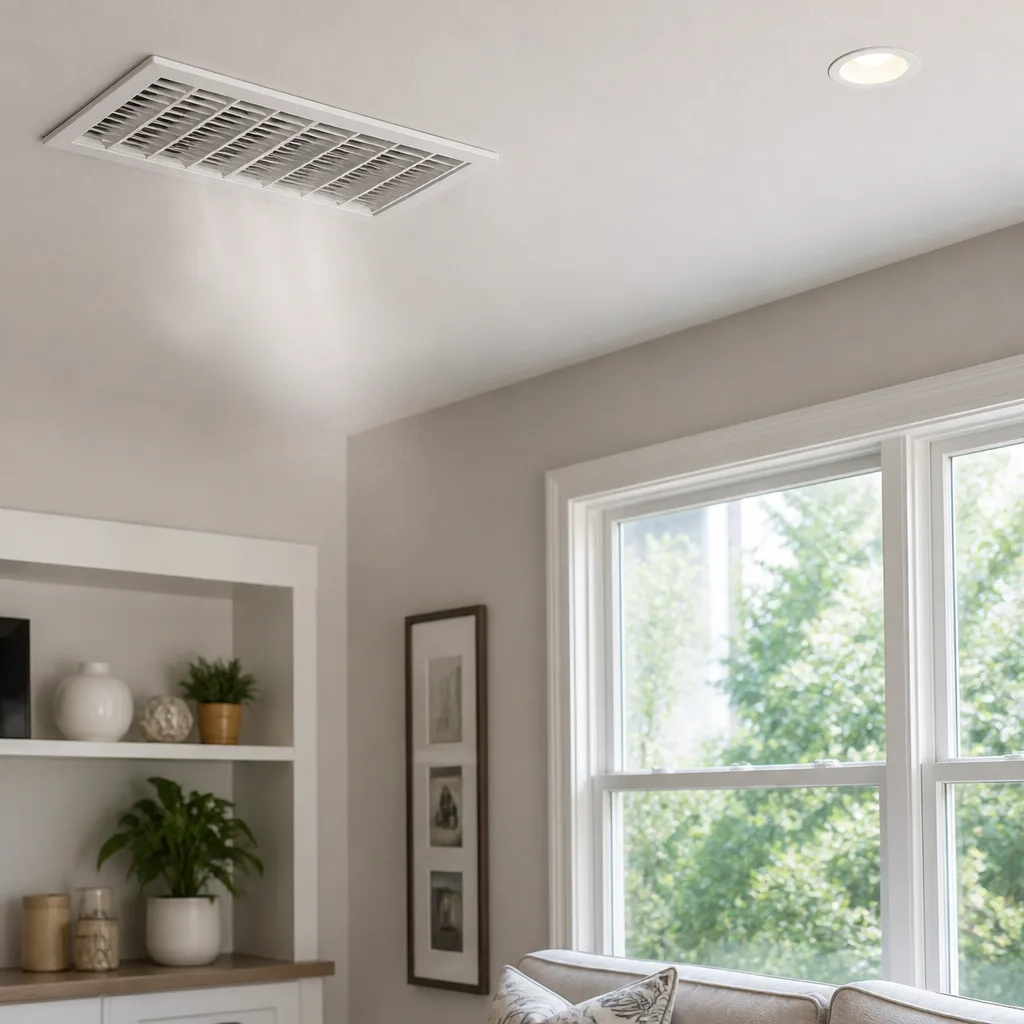 Sanitizing & deodorizing
Whole-system duct and dryer vent check with before-and-after photos - you see exactly what came out of your vents
That "$99 whole-house special" is a bait ad - the real number appears once they are in your hallway, or the "clean" is a shop-vac at the register. We photograph the inside of your ducts before and after instead.
Air Duct Cleaning Permits, Codes & Inspections in Orange, CA: What You Need to Know
Here’s the part most homeowners don’t expect: air duct cleaning itself needs no permit in Orange, CA. But the moment someone cuts a new access hole, replaces a duct run, or seals joints inside the system, you’ve moved from cleaning into work that can fall under the California Mechanical Code and Orange jurisdiction rules. That line between cleaning and construction is where problems start. An unsealed access hole in flex duct can compromise your HVAC manufacturer warranty, and it can surface as a code issue during a real estate inspection. This guide explains exactly where that line sits, which work triggers a permit, how C-20 licensure fits in, and what a clean job file should contain.
Quick Answer
Routine air duct cleaning in Orange, CA does not require a permit and is not inspected by the city. But duct repair, duct replacement, new access cut-ins, and sealant applied inside the duct system may fall under the California Mechanical Code and Orange Building Department jurisdiction, and that work should be done by a licensed C-20 contractor. Cleaning is maintenance; anything that alters the system is construction. Knowing which one you’re buying protects your warranty and your home sale.
Styles & brands we work with
- Whole-home duct cleaning
- Dryer vent cleaning
- Camera inspection
- Sanitizing & deodorizing
Table of Contents
- Cleaning vs. Construction: Where the Line Actually Sits
- How California Title 24 and the Mechanical Code Touch Duct Work
- When Orange Building Department Jurisdiction Is Triggered
- Why C-20 Licensure Matters and How to Verify It
- HOAs and Rental Properties in Orange: What to Document
- What a Compliant Job File Looks Like
- How to Verify the Work Was Actually Done
- Common Mistakes to Avoid
Cleaning vs. Construction: Where the Line Actually Sits
Three different scopes get sold under the same label, and they carry very different legal weight. Cleaning removes debris from a system that stays as it was built. Repair restores a system already built. Replacement builds a new section. Only the first one is pure maintenance. When a company quotes you a single flat price for “duct cleaning,” ask which of these three they’re actually performing, because the answer determines whether a permit, a licensed contractor, or a city inspection enters the picture.
This distinction matters more in Orange than people realize, because of the housing stock. Much of Orange was built in the decades after the Second World War, and a large share of those homes still run the original rigid galvanized trunk lines with flex branches added later, often during an HVAC swap. Those flex branches are the vulnerable part. They’re easy to cut, easy to leave unsealed, and easy to damage during an aggressive cleaning with the wrong tool. A brush that’s too stiff for the liner will tear it, and a torn liner is no longer a cleaning problem; it’s a repair.
Here’s how the scopes break down in practical terms:
- Cleaning: mechanical agitation plus negative-air extraction. No cutting, no new material, no alteration. Not a permitted activity.
- Repair: mastic or foil-tape sealing at joints, reconnecting a separated branch, patching a torn liner. Alters the system, may trigger local review depending on scope.
- Replacement: removing and installing new duct sections, cutting new access points, rerouting. Construction. Permit territory depending on scope and the local building department’s read.
When our technicians find a damaged liner mid-cleaning, they stop and document it with photos rather than patching blindly. The homeowner then decides whether to authorize the repair. That pause is deliberate: repair work is licensed-contractor territory, and it should be priced and scoped in writing before anyone touches it. If you’re scheduling a routine service first, our air duct cleaning page walks through what a cleaning-only visit involves.
How California Title 24 and the Mechanical Code Touch Duct Work
California Title 24’s energy provisions and the California Mechanical Code (CMC) intersect with duct work in two places: duct sealing and duct insulation. Title 24 sets requirements for how duct systems in conditioned and unconditioned spaces must be sealed and insulated to limit energy loss, and the CMC sets the installation and materials standards. Neither one governs cleaning. Both can govern what happens when a technician opens up a system and puts it back together differently than they found it.
In plain terms, if a section of duct in an unconditioned attic is removed and reinstalled, the reinstalled section needs to meet current sealing and insulation expectations, not the expectations from when the house was built. That’s the shift most homeowners miss. A repair that merely gets the air flowing again doesn’t automatically satisfy the code’s intent, and an inspector reviewing a permitted job will look at the seal, the support, and the insulation, not just whether air comes out of the register.
Where this shows up in daily practice:
- Mastic and approved foil tape are the sealing materials of record. Cloth-backed “duct tape” is not an approved permanent seal under mechanical code expectations, even though it’s what’s in most garages.
- Duct support spacing and sag limits matter. A re-hung flex run that sags restricts airflow and fails the intent of both documents.
- Penetrations through the building envelope get sealed as part of the job, not left as open gaps.
- Insulation R-value on replaced sections should match or exceed what the energy code calls for in that assembly.
We’re careful about this because it’s easy to overclaim. The code is specific, the local interpretation varies, and the final word belongs to the Orange Building Department, not to a cleaning company. Our job is to know when to stop cleaning and hand the scope to a licensed mechanical contractor, and to make sure the homeowner understands which document applies to which slice of work.
When Orange Building Department Jurisdiction Is Triggered
This is the question we get most, and it deserves a straight answer. Orange Building Department jurisdiction typically starts where the work stops being maintenance and starts being alteration. Cleaning a system as-built: no permit. Sealing joints at existing connections: usually considered maintenance repair, but scopes vary. Cutting a new access point, replacing a run of duct, or rerouting a branch: that’s construction, and you should expect a permit conversation.
The thresholds aren’t uniform from one project to the next, and we won’t pretend otherwise. The honest answer is that the person who owns the scope has to confirm it with the city. What we can tell you is how the scopes usually sort:
- Cleaning only. No permit, no inspection, no license required to perform it in most readings. Documentation still matters for warranty and resale.
- Repair to existing duct. Often treated as repair rather than new construction. Confirm with the Orange Building Department whether your specific scope crosses the line.
- New access cut-ins. Cutting into the system creates an opening that has to be sealed correctly. This is the scope most likely to draw review, especially when a new return is added.
- Duct replacement or rerouting. Treated as mechanical work. A licensed C-20 contractor pulls the permit, and the work gets inspected.
- Sealing with approved materials inside the system. Depends on the material and the application; confirm before authorizing it as part of a cleaning.
If you’re in a neighborhood like Old Towne Orange, where homes carry a historic overlay and exterior work gets extra attention, the permit question gets layered on top of design review. Interior duct work inside the conditioned space usually stays clear of that overlay, but attic and crawlspace penetrations that affect the envelope are worth asking about. A two-minute call to the Building Department before work starts is cheaper than discovering the issue at inspection.
One practical note: plenty of companies will tell you “no permit needed” for every scope because it removes a step from their quote. Treat that as a flag. The right answer depends on what you’re actually having done.
Why C-20 Licensure Matters and How to Verify It
California licenses HVAC contractors under the C-20 classification. Cleaning a duct system that stays as-built doesn’t require that license. Altering, repairing, or replacing duct work does, and hiring an unlicensed operator for that scope is where homeowners get hurt: warranty exposure, code exposure at resale, and no recourse if a repair fails. This is the single most useful distinction in this guide.
The good news is that verification is public and free. The Contractors State License Board (CSLB) maintains a searchable database, and the check takes a couple of minutes:
- Go to the CSLB website and open the license lookup.
- Enter the license number the contractor gives you, or search by business name.
- Confirm the license is active, and confirm the classification includes C-20 for mechanical work.
- Check the expiration date and confirm there’s no disciplinary action on record.
- Compare the name and business address on the license to the name on the quote.
Do this before you sign, not after. If the scope is cleaning only, ask anyway what happens if the technician finds a repair mid-job. A company that treats cleaning and repair as separate, separately licensed decisions will answer that question directly. When we connect you with a local professional, that professional is licensed and insured as their state requires, and any repair scope moves to a licensed mechanical contractor before work begins.
A small detail worth checking: the license number should appear on the invoice, not just the business card. If a company won’t put it in writing, that tells you something about how they handle the rest of the paperwork too.
HOAs and Rental Properties in Orange: What to Document
Orange has a meaningful share of multi-unit properties, planned communities, and single-family rentals, and each one adds a documentation layer to a duct job that a standalone owner-occupied home doesn’t have. HOAs frequently require advance notice before any work that touches common areas, roof penetrations, or shared attic space. Property managers, meanwhile, are often the ones who have to answer for the work years later, when a tenant complaint or an insurance review lands in their inbox.
If you manage property in Orange, treat every duct cleaning as a file, not a service call. These are the items worth capturing:
- Written scope of work: what was cleaned, what was inspected, and what was found.
- License number and insurer information for anyone who performed work beyond cleaning.
- Before-and-after photos, dated, of the interior of representative duct runs.
- Unit-by-unit documentation rather than a single invoice for a whole building.
- Any repair recommendations in writing, with the recommendation to have that scope handled by a licensed C-20 contractor.
- HOA notice or approval, if the property’s governing documents require it.
The liability angle is the real point here. If a tenant raises an air quality complaint and the manager can produce dated documentation showing a system that was verified clean, the conversation moves fast. If the file is a single receipt with a price on it and nothing else, that same conversation becomes a negotiation. The same logic applies when a building changes hands mid-lease and the new owner wants to know what’s been done.
For a multi-unit property, drying vent work and duct work are separate line items and should be documented separately. Our dryer vent cleaning page covers why that separation matters for both fire safety and your file.
What a Compliant Job File Looks Like
A compliant job file is simple but specific, and almost nobody produces one. It doesn’t need to be elaborate. It needs to survive scrutiny, whether that scrutiny comes from a home inspector, a buyer’s contractor, an insurer, or your own HVAC warranty claim two winters from now. Here’s what should be in it.
- Invoice scope language. “Cleaned air ducts” is not a scope. “Cleaned supply and return trunk plus all branch runs, with negative-air containment maintained throughout” is a scope. The sentence has to describe what was done, not what was sold.
- Equipment named. Rotobrush contact cleaning and Nikro negative-air extraction are specific methods. Naming them tells a reviewer exactly how the debris was removed and how cross-contamination was prevented.
- License number, when applicable. Any repair or alteration should trace to a licensed C-20 contractor, and the number belongs on the invoice.
- Before-and-after photographic evidence. Dated, of your ducts, not stock images. This is the single document that settles most disputes.
- Findings and recommendations. Torn liner, substandard seal at a joint, evidence of moisture: written down, with a clear note on whether a licensed contractor should scope the repair.
- Signed acceptance. Your signature on the scope of work, with one flat price for the system agreed before the job begins. No per-vent math showing up at the end.
That signature matters more than it looks. It’s the record that you and the company agreed on the scope and the price before the work started, which is exactly the record that’s missing when a homeowner calls us after the fact to sort out a surprise invoice.
One piece of the file that gets overlooked: the HVAC manufacturer’s warranty terms. Some manufacturers require documented maintenance for warranty claims involving the duct system, and an undocumented cleaning doesn’t satisfy that. The invoice with the specific scope is the document that does.
How to Verify the Work Was Actually Done
Verification is the difference between a receipt and evidence. Anyone can hand you an invoice. Evidence is photographic, specific, and captured inside your own system before and after the work. When we hear from homeowners skeptical of the low-price crowd, the skepticism is usually earned: a surface blow-out with a shop vac leaves the debris in the branches, and there’s no photo trail to prove otherwise. Real cleaning uses contact agitation and contained extraction, and it produces a visible difference.
Here’s what to ask for, and check:
- Photos of the same duct sections before and after, dated, from your home.
- A method description in writing, naming the equipment.
- Containment confirmation: negative air maintained so living spaces stay clean during the work. Nikro negative-air machines and Abatement Technologies equipment come into play here, especially when a system carries mold or construction-dust contamination.
- Surface protection during the visit, so furniture and floors are covered before anyone opens the system.
- A final walkthrough where the technician shows you the register openings and any findings.
If you’re also having the HVAC unit itself cleaned, that scope is separate from duct cleaning and worth documenting on its own. Our HVAC cleaning page explains how the two scopes overlap. When we connect you with a local professional, that technician is licensed and insured as their state requires, and the estimate is free with one flat price per system agreed in writing before work starts.
Filtration is the last verification point. A system that’s been cleaned but still runs a clogged filter will reload debris into the ducts within weeks. Honeywell and Aprilaire filtration upgrades, when appropriate for the system, are how a clean duct system stays clean. That’s the difference between a service visit and a result that lasts.
Common Mistakes to Avoid
These are the patterns that show up when we look at a job gone sideways. Each one is avoidable with a question asked before the work starts.
- Accepting “no permit needed” as a blanket answer. It’s correct for cleaning and often wrong for repair or replacement. Make the company tell you which scope they’re selling, in writing.
- Hiring an unlicensed operator for repair work. A low-priced repair by someone without a C-20 license leaves you without recourse if the joint fails or the liner tears. Check the CSLB database before you sign.
- Letting access holes get cut and left unsealed. A new cut-in in flex duct that isn’t sealed correctly leaks air into the attic and can surface in a home inspection. Ask how the opening will be closed and with what material.
- Judging the job by the price alone. A very low quote usually means a surface pass with no containment, no photos, and no documentation. The work looks done and isn’t.
- Skipping the file entirely. An invoice that says “duct cleaning” and nothing else won’t help you at resale, with a warranty claim, or with an insurer. Insist on scope language and photos.
- Overlooking the HOA notice requirement. In an Orange planned community, work that touches shared attic space or the roofline without notice can create a violation for the owner, not the contractor.
- Mixing duct cleaning and dryer vent cleaning on one line item. They’re separate systems, separate safety profiles, and separate documentation. Keep the paper trail distinct.
The common thread: none of these mistakes has anything to do with the cleaning itself. They’re paperwork and scope mistakes, and paperwork is where most of the exposure lives.
See the difference
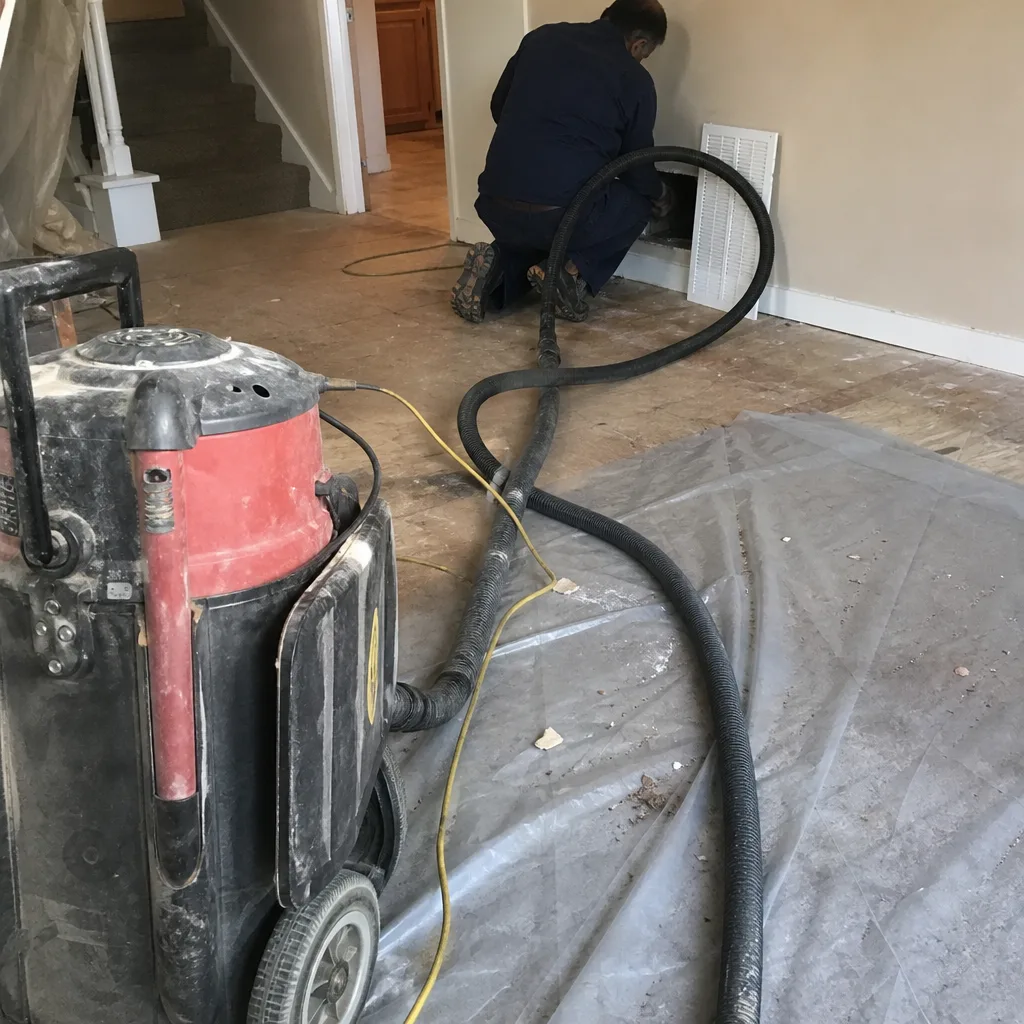 Before
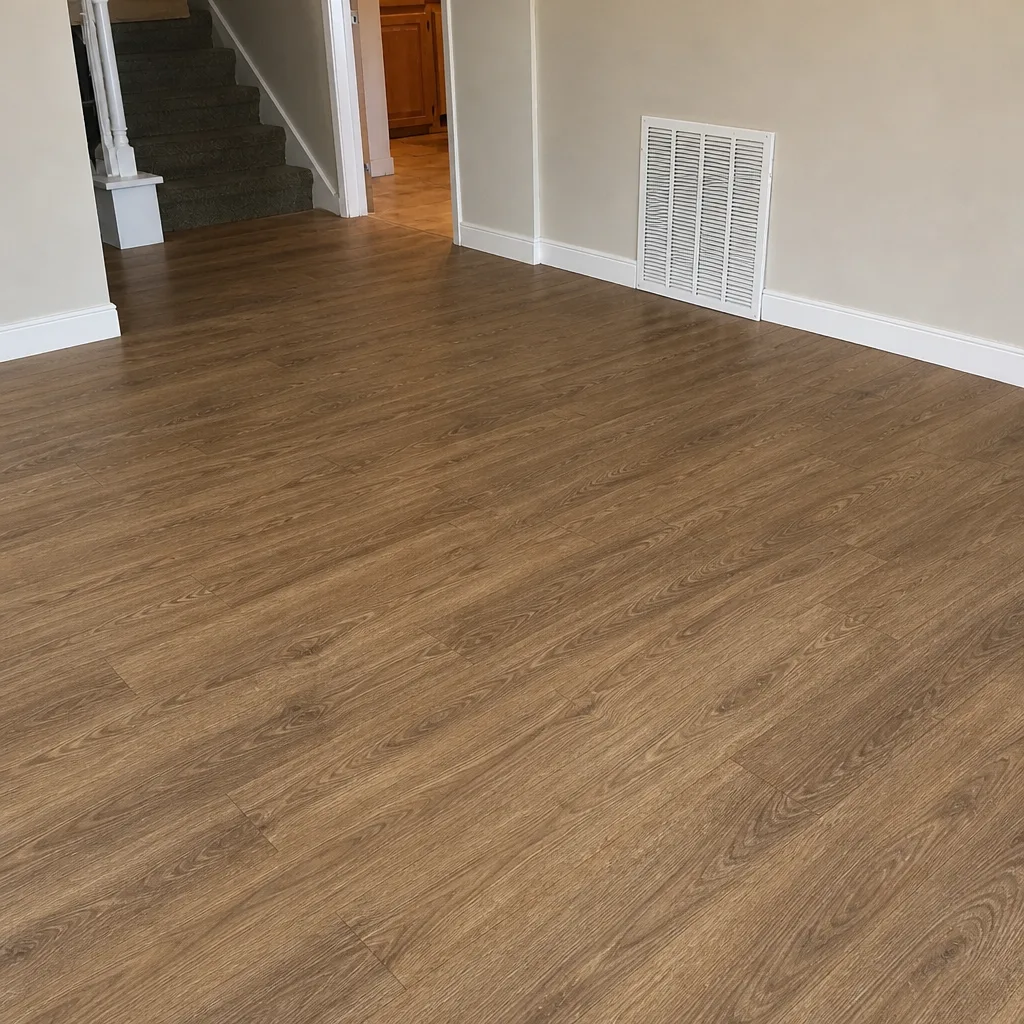 After
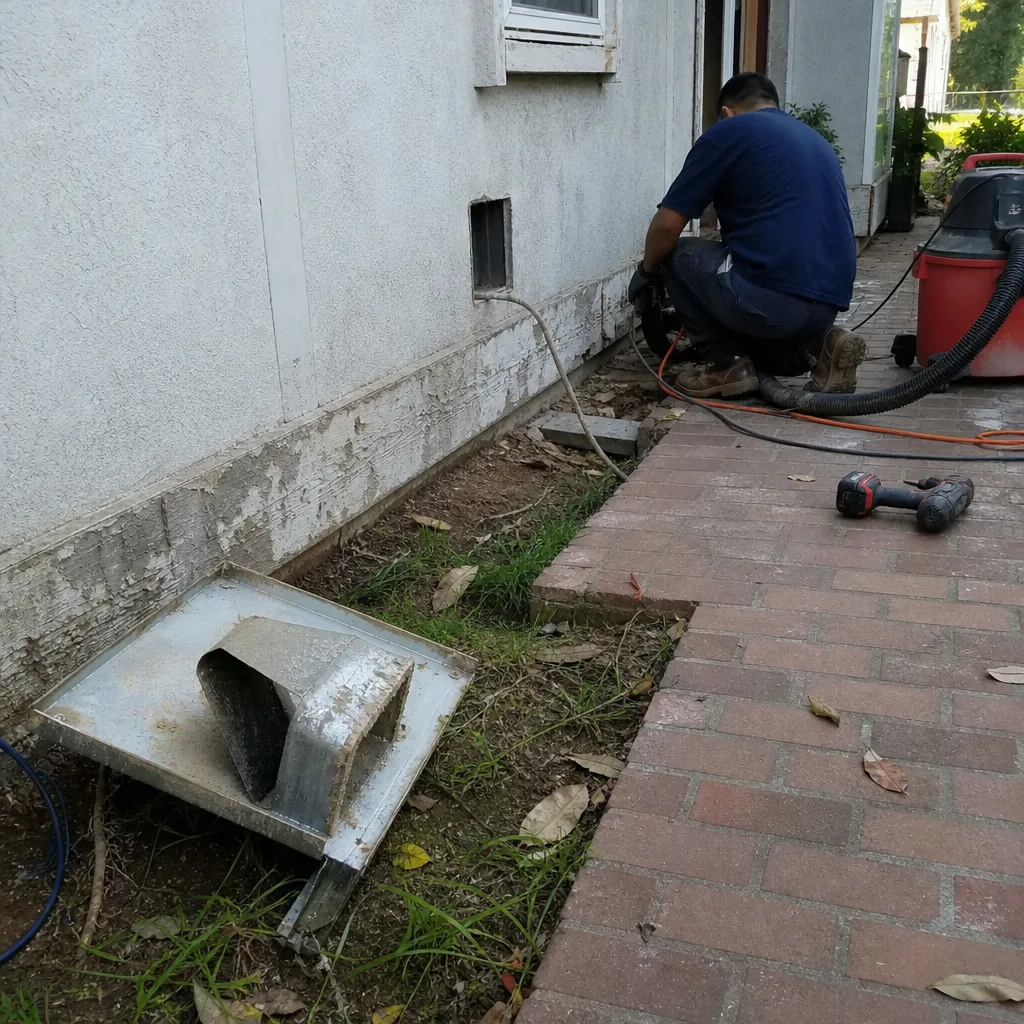 Before
 After
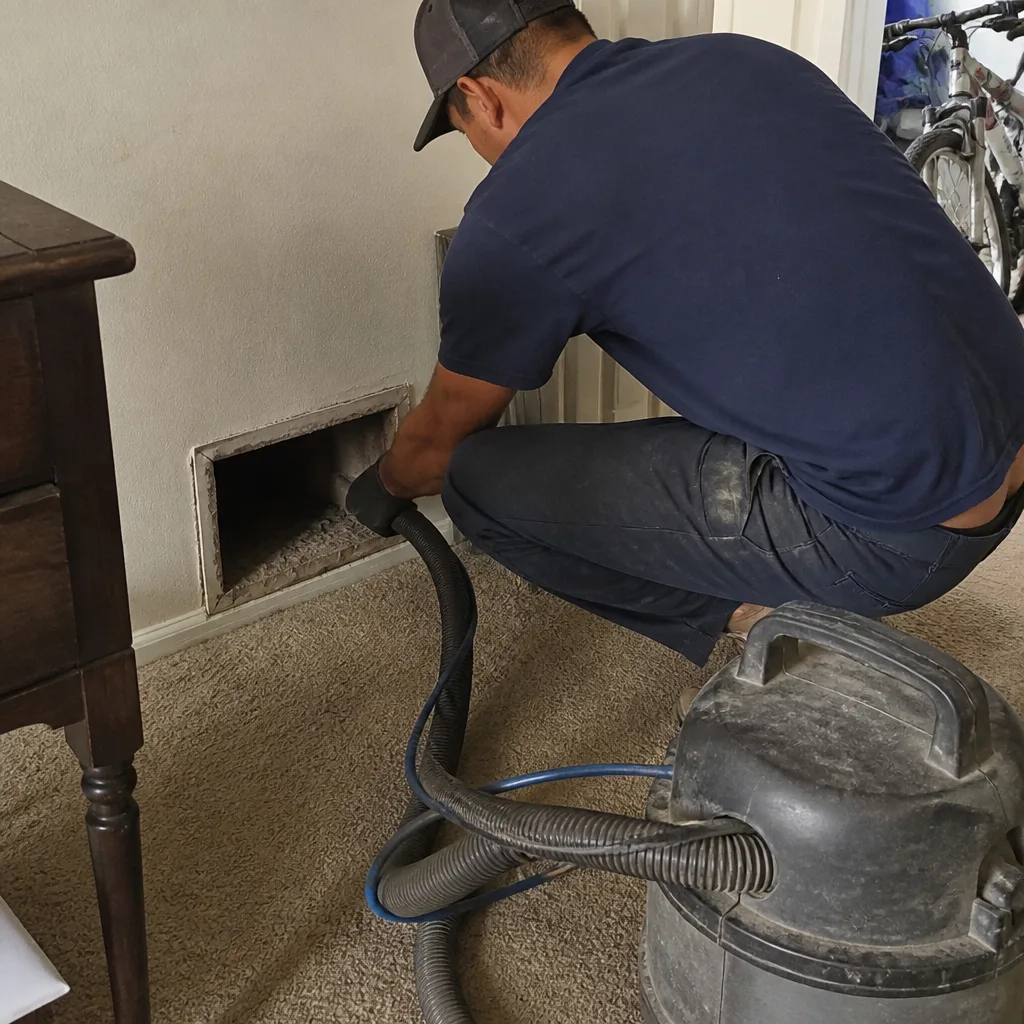 Before
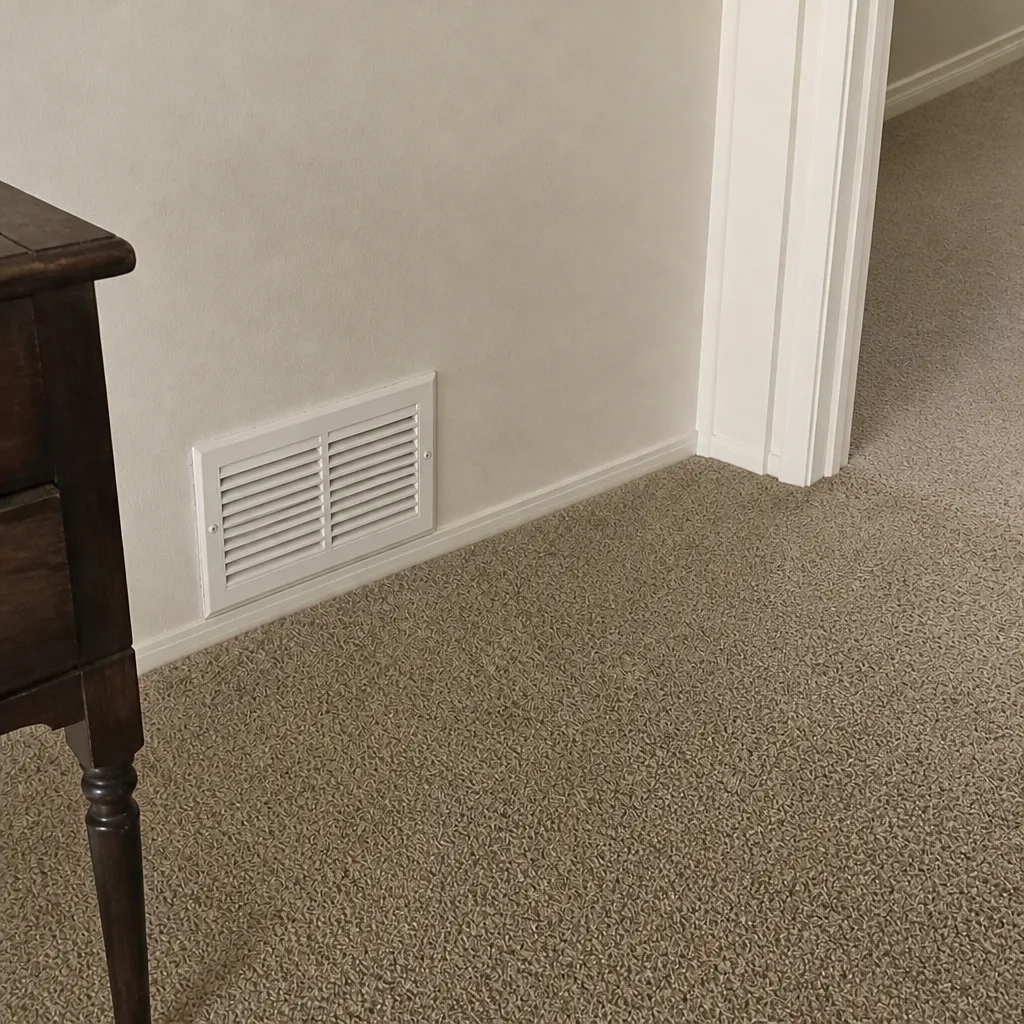 After
When to Call a Professional
Some duct conditions are beyond a homeowner’s reach, and some are beyond a cleaning company’s. Call a professional when you notice musty odors that return after a cleaning, visible debris blowing from a register, inconsistent airflow between rooms, or an HVAC system that’s never had the ducts inspected. Call a licensed C-20 contractor when a liner is torn, a duct section has separated, or a new run is needed. And call a professional if you’re in a multi-unit Orange property and your documentation file is thinner than you’d like going into a sale or a tenant review. Orange Air Duct Cleaning Co offers free estimates in Orange – call (855) 658-3734.
Frequently Asked Questions
No. Routine air duct cleaning in Orange, CA does not require a permit, because it doesn’t alter the system. A permit enters the conversation only when the scope includes cutting new access points, replacing or rerouting duct runs, or altering the system in a way the Orange Building Department treats as construction. Confirm the specific scope with the city if you’re unsure. Call (855) 658-3734 for an exact quote – estimates are free.
Cleaning alone typically doesn’t require a C-20 classification, but repair, sealing that alters the system, and any duct replacement do. Ask which scope you’re buying. If it includes repair, verify the contractor’s license on the CSLB public database, and confirm the classification and the active status before work starts. Call (855) 658-3734 for an exact quote – estimates are free.
Improper work can. An unsealed access hole, a torn flex liner, or a sealant applied without following the manufacturer’s guidelines are the common failure points, and a manufacturer reviewing a warranty claim can treat them as installation defects rather than maintenance. That’s why scope language and before-and-after photos belong in your file. Call (855) 658-3734 for an exact quote – estimates are free.
A written scope of work, the license number of anyone performing work beyond cleaning, dated before-and-after photos per unit, any repair recommendations in writing, and HOA notice where the property’s governing documents require it. Unit-by-unit documentation matters more than a single building-wide invoice, especially if a tenant complaint or an insurance review comes later. Call (855) 658-3734 for an exact quote – estimates are free.
Pricing is per job, set by a written estimate after the system is scoped, because a single-story ranch and a two-story home with multiple zones don’t take the same work. What you should insist on is one flat price per system agreed before work begins, with no per-vent math added once the technician is on site. Call (855) 658-3734 for an exact quote – estimates are free.
Usually because less work is happening. A low quote often means a surface pass without contact agitation, no negative-air containment, no photographic documentation, and no written scope. None of those shortcuts shows up in a price comparison, and all of them show up later, either as a repeat service or as a repair. Call (855) 658-3734 for an exact quote – estimates are free.
It depends on the system and the household more than on a calendar. A home with pets, recent remodeling dust, allergy symptoms, or no documented cleaning in years is a candidate now; a system cleaned and sealed properly with good filtration holds up longer. Filtration upgrades from brands like Honeywell and Aprilaire, where appropriate, extend that interval. Call (855) 658-3734 for an exact quote – estimates are free.
Ask for dated before-and-after photos of your own ducts, a written method description naming the equipment, and a final walkthrough of the register openings. Rotobrush contact cleaning physically removes debris rather than dislodging it, and Nikro negative-air extraction keeps the living space contained. Those methods produce visible evidence, and evidence is what you should be paying for. Call (855) 658-3734 for an exact quote – estimates are free.
The Bottom Line
Cleaning your ducts in Orange doesn’t require a permit. Repairing or replacing them can, and that’s the line worth remembering. Ask any company which scope they’re selling before you sign. Verify a C-20 license on the CSLB database if the work goes beyond cleaning. Keep a file with specific scope language, dated photos, and the license number, because that file is what protects you at resale, in a warranty claim, and in a tenant dispute. The work should be verified clean, not just serviced. One flat price per system, agreed in writing before anyone starts.
We’re Orange Air Duct Cleaning Co, and our technicians have up to 11 years of experience working with residential and light-commercial systems across Orange. If you want a scope you can actually read, with the documentation to back it up, call (855) 658-3734 for a free estimate. We answer 24/7. Fast dispatch from 7am to 7pm, Sunday through Friday, closed Saturday.
Written by the team at Orange Air Duct Cleaning Co.