
Last updated November 25, 2026
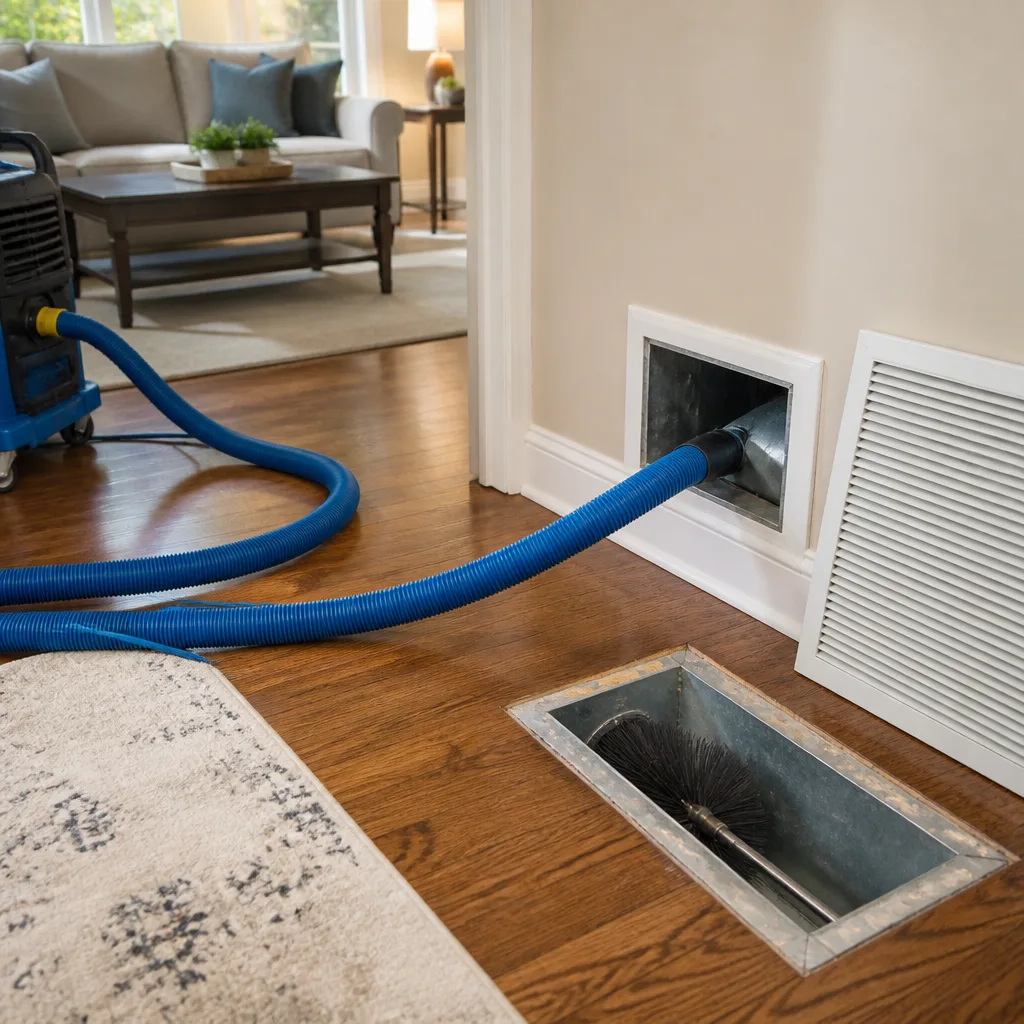 Whole-home duct cleaning
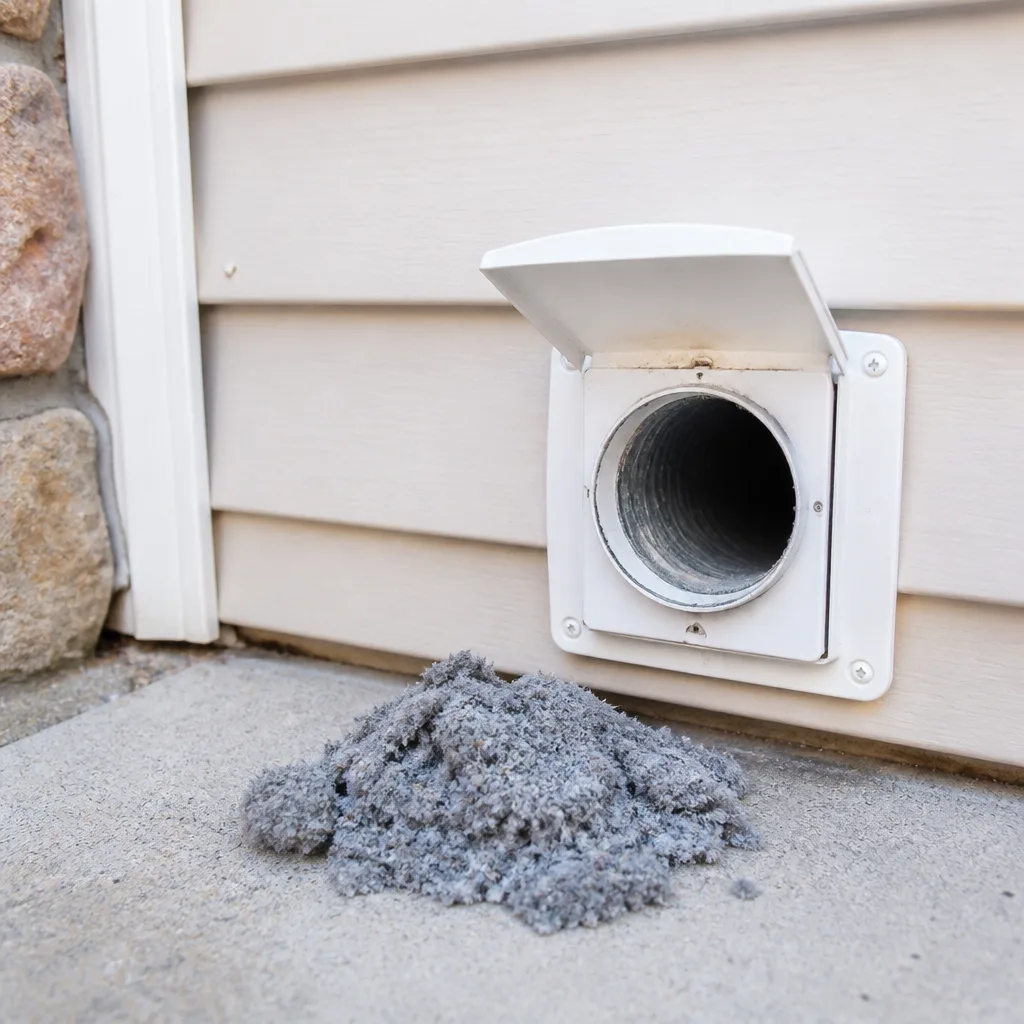 Dryer vent cleaning
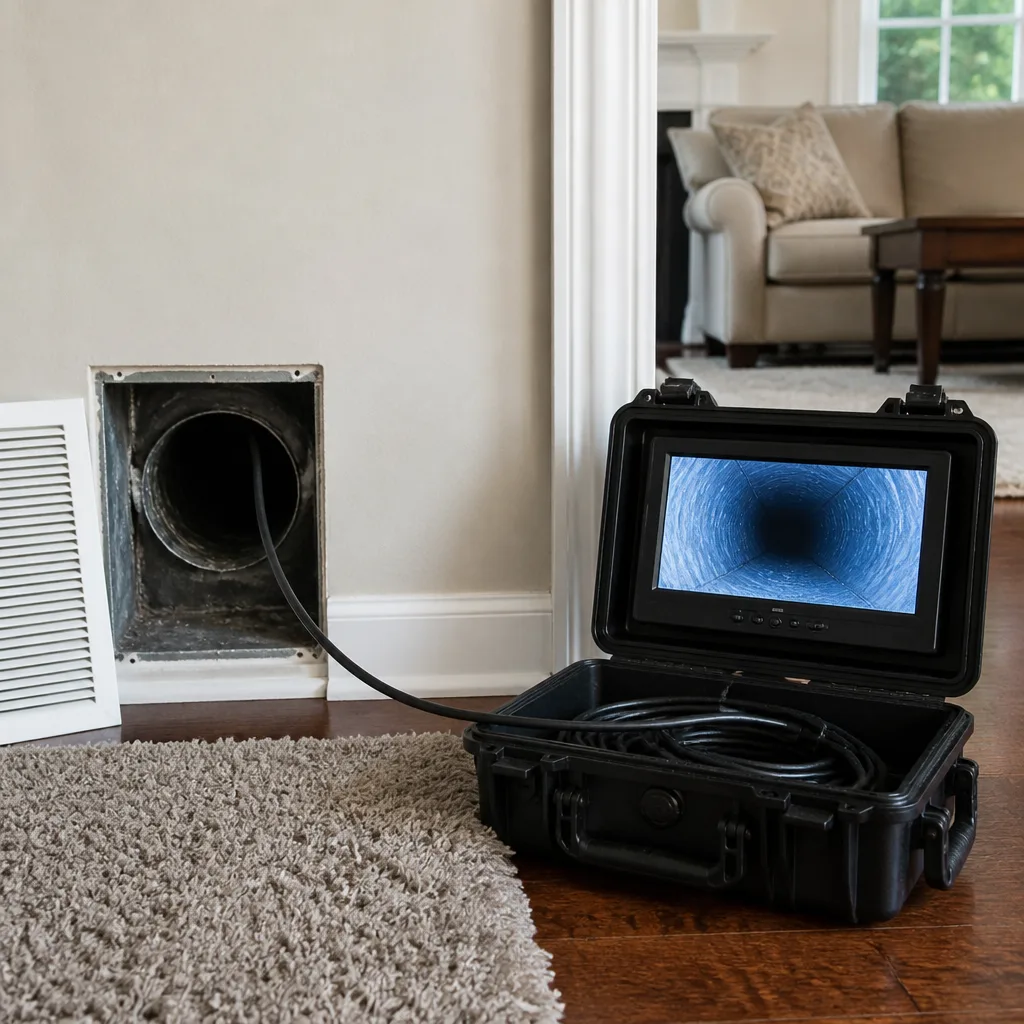 Camera inspection
 Sanitizing & deodorizing
Whole-system duct and dryer vent check with before-and-after photos - you see exactly what came out of your vents
That "$99 whole-house special" is a bait ad - the real number appears once they are in your hallway, or the "clean" is a shop-vac at the register. We photograph the inside of your ducts before and after instead.
Air Duct Cleaning Warning Signs: An Orange Homeowner’s Reference Guide
Most duct problems we look at in Orange don’t arrive with drama. They arrive as a slow drift: an upstairs bedroom that never quite cools, a faint smell in one hallway, an electric bill that’s nudged up 10 – 15% over two years while your habits stayed the same. It’s easy to blame the thermostat, the utility company, or the house being “a little older.” In our experience, the duct system is the last thing homeowners check and often the first place the trouble lives. This guide walks through the specific warning signs we look for, what each pattern actually tells you about where contamination sits, and when it’s worth a professional look. You’ll finish knowing what dust on a register really means, why one musty room is different from a whole-house smell, and how to read your own system before anyone shows up with a vacuum.
Quick Answer
The clearest air duct cleaning warning signs for an Orange homeowner are dust ejected from registers when the blower starts, musty odors in one or two rooms rather than the whole house, longer heating and cooling runtimes with uneven room temperatures, visible flex-duct collapse or disconnection at trunk connections in post-1990s tract homes, and lint or slow drying around the dryer vent. Dust that settles on a register between cleanings is normal; dust that blows out at startup means contamination is sitting in the branch run feeding that register. If you’re noticing two or more of these together, a professional inspection is the reasonable next step.
Styles & brands we work with
- Whole-home duct cleaning
- Dryer vent cleaning
- Camera inspection
- Sanitizing & deodorizing
Table of Contents
- Dust on Registers vs. Dust Ejected at Startup
- Why Musty Odors in Specific Rooms Point to Localized Growth
- How to Read Runtime and Uneven Temps as Static Pressure Clues
- Warning Signs in Orange’s Post-1990s Tract Homes
- Dryer Vent Warning Signs That Mirror Duct Warnings
- The Fifteen-Minute Walk-Through We Recommend First
- What’s Normal, What Isn’t, and How to Tell the Difference
- When to Call a Professional
Dust on Registers vs. Dust Ejected at Startup
There’s a big difference between a dusty register and a contaminated branch run, and the pattern tells you which you’re dealing with. Dust that settles slowly onto a register grille between cleanings is normal house dust pulled in through the return and settling. Dust that puffs out of a register within the first seconds of the blower starting is a different signal: contamination has built up inside the duct above that register and gets thrown into the room each time air pushes through.
Here’s how to tell them apart on your own system:
- Clean the register grille with a dry cloth. Note the date.
- Run your system normally for several days without touching the grille again.
- Shine a flashlight at the grille before the blower kicks on. Look for a thin, even film. That’s normal.
- Then stand near the register as the system starts up. If you see a puff of dust, or a visible cloud, that register’s branch run is likely loaded with debris.
- Compare registers across the house. Dust ejection at one or two registers points to localized contamination. Ejection at most registers suggests the trunk line or the air handler itself is the source.
- Look at the register fins. Fins coated with a dark, greasy film point to cooking vapor, candle soot, or general oil-based buildup, which settles differently than dry dust.
The clean-air mechanism matters here. Air handler blowers move air at a velocity that can lift loose dust off the surfaces of a dirty duct. That’s why a homeowner with a genuinely dirty system gets a little “sneeze” of dust every time the blower starts. Once the contamination is heavy enough to be seen, a wipe-down of the register won’t fix it. Coming from an assessment standpoint, our technicians use contact cleaning methods like Rotobrush to physically dislodge that debris rather than blowing it into the room. The same tools are used in commercial remediation work, applied to residential and light-commercial jobs in Orange.
Why Musty Odors in Specific Rooms Point to Localized Growth
A musty smell in one bedroom but not the living room is rarely the whole system. It’s usually localized microbial growth in the branch run feeding that room, or in the boot where the duct meets the floor. The pattern of where it happens, and when, tells you where the moisture problem started.
Pay attention to these details when you first notice a smell:
- Where is it? Farthest rooms from the air handler, bathrooms, and rooms above garages tend to show it first. These runs get less airflow and hold moisture longer.
- When does it show? If it’s strongest in the morning after an overnight off-cycle, moisture is condensing on the duct interior during the off hours and evaporating when air starts moving.
- Is it near the return? A return grille that smells worse than the supply registers points to the air handler, the filter, or the coil rather than the branch runs.
- Is it worse after rain? San Bernardino and Orange County weather is mostly dry, but a single rainy week can spike an existing moisture issue in a duct that’s already got a slow leak.
- Is it musty or biological? A musty, wet-paper smell is microbial. A dry, dusty smell is debris. A sharp chemical smell is a separate problem entirely and needs a different conversation.
The term “old house smell” gets used too freely in Orange. A 1970s ranch and a 2005 tract home can smell similar when their duct interiors have the same moisture profile. What separates a real problem from a livable quirk is localization. One room that smells noticeably worse than the rest is worth investigating, and the answer usually sits in that branch run, not the entire house. Sanitizing at the source, rather than masking with fragrance, is the approach that actually resolves it. Our Orange Air Duct Cleaning Co work covers both the cleaning step and the air quality treatment that goes with it when growth is suspected.
How to Read Runtime and Uneven Temps as Static Pressure Clues
Static pressure is the resistance airflow meets as it moves through the duct system. When ducts get loaded with debris or lose their shape, that resistance climbs. The technician measures it with a manometer, but you can infer a lot from how the system behaves long before anyone pulls out an instrument.
Here are the everyday signs that static pressure has gone up:
- Runtime creep. Your system used to bring a room to temperature in ten minutes and now takes fifteen. The blower is pushing harder against resistance.
- Uneven rooms. Rooms closest to the air handler stay comfortable; rooms at the end of the longest runs fall behind. This is duct friction, not a failing thermostat.
- Short cycling followed by long cycles. Odd cycling patterns can mean the system is fighting the duct, not the outdoor temperature.
- Higher utility bills without a change in habits. A 10 – 15% creep over two years is roughly what a restricted duct system costs you in efficiency losses.
- Audible strain at startup. A soft whoosh is normal. A strained pitch or rattle at the air handler is not.
We’ve seen the pattern often enough in Orange to trust it: when three or four of those signs show up together, static pressure has usually increased measurably and the system needs an actual inspection rather than another filter change. Some of those signs can also come from a dirty evaporator coil, a saturated filter, or an undersized return. Our HVAC cleaning process covers the air handler and coil alongside the ducts, so the measurement means something once the system is clean.
Warning Signs in Orange’s Post-1990s Tract Homes
Orange’s housing stock has a specific weakness that shows up repeatedly in our inspections: flex duct installed in the attic during the 1990s and 2000s. Flex duct is convenient and fast to run, but it sags, kinks, and pulls loose at the trunk connection over time, and those failures are easy to miss.
What to check on a tract home with flex duct:
- Look in the attic for runs that sag between hangers. A flex run that droops is a restricted run, sometimes reduced to half its designed airflow.
- Check the connection where each branch meets the trunk. If the inner liner has slipped or the outer vapor barrier is torn, that run is either detached or leaking air into the attic instead of the room.
- Feel the floor register airflow at each room during a normal run. A register with noticeably weaker airflow than its neighbors often has a disconnected or collapsed branch.
- Listen at the air handler. A whistling sound or a rush of air that changes when you pinch off a supply register tells you the return is undersized or the trunks are leaking.
- Look for dust streaks on the attic insulation around the duct runs. Air leaking out of a disconnected boot leaves a visible trail in the dust.
A collapsed or detatched flex run doesn’t just cut airflow; it pulls attic air, insulation fibers, and dust into the airstream. That’s when a system starts delivering a small but steady load of particulates to a room that was previously fine. Nikro negative-air equipment during cleaning keeps that dust contained and out of living spaces. Our air duct cleaning service includes checking and reattaching flex runs at the trunk, so the fix addresses both the debris load and the mechanical failure that caused it. Duct repair and sealing, a separate service we offer, handles cases where the liner itself has failed.
Dryer Vent Warning Signs That Mirror Duct Warnings
Your dryer vent follows the same rules as the supply ducts in your HVAC system: it’s an air pathway, it accumulates lint over time, and the first signs are small patterns rather than big problems. The difference is that dryer vent problems move from performance loss to safety risk much faster.
Dryer vent warning signs worth acting on:
- Dry times growing longer. If your towels now take two cycles instead of one, the vent is restricted.
- The exterior flap not opening fully. A flap that flutters or barely lifts means the airflow reaching it has been cut down.
- Lint accumulating around the exterior cap. Lint on the outside of the house means lint is building up on the inside too.
- The dryer top feeling very warm. Restricted venting sends heat back into the appliance.
- A burning or hot-plastic smell. Stop using the dryer and get the vent inspected.
- Moisture on interior walls near the dryer. A vent that’s blocked blows humid air back inside.
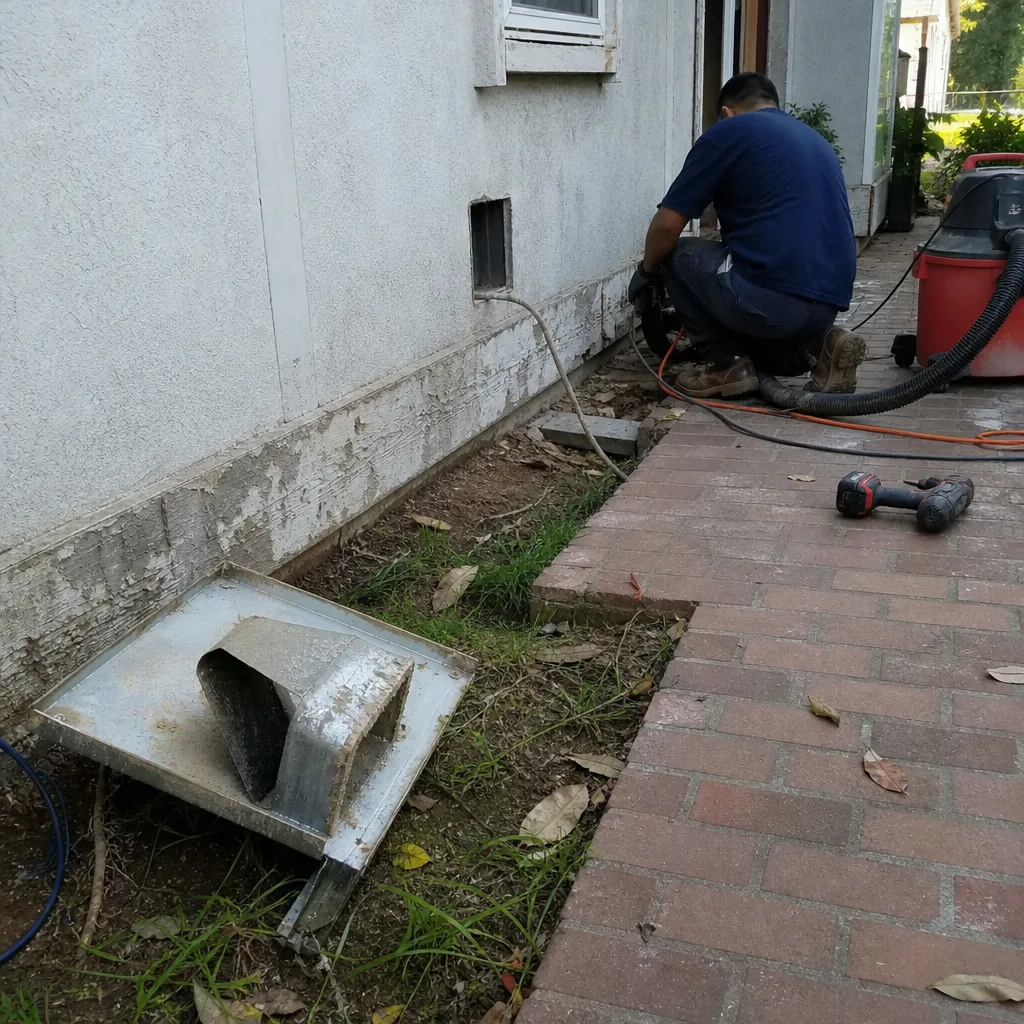
Our dryer vent cleaning addresses the full run from the appliance to the exterior cap, not just the segment reachable from the laundry room. Most of the buildup sits in the longest stretch of the run, which is the part you can’t see from inside. Rotobrush rods and brushes handle the length; the inspection happens with a camera. If the flap moves freely and the dry times stay normal, you don’t have a problem. When they don’t, that’s a leading indicator to look at the HVAC ducts too – a house with a restricted dryer vent often has restricted supply ducts, and both are the same family of problem.
The Fifteen-Minute Walk-Through We Recommend First
Before you call anyone, a fifteen-minute walk-through of your own home will tell you most of what you need to know. You don’t need tools for most of it. A flashlight, a notepad, and a real attention to patterns gets you to a sensible decision about whether an inspection is warranted.
- Start at the filter. Pull the return filter and hold it up to a light. If you can’t see light through it, the filter’s been in place too long and the system has been pulling harder than it should. Replace it and note the date.
- Walk every room and time the airflow. Hold a light piece of tissue up to each supply register. Note where it’s strong, weak, and barely moving.
- Do the startup test. Stand near a register, then have someone turn the system on. Watch for dust ejection at each register you can reach.
- Smell each room. Close your eyes and take a full breath in each room. Note any musty, dusty, or chemical smell and where it’s strongest.
- Look at the return grille. Any visible dust mat, or a dark streak around the edges of the frame, points to a loaded return rather than a dirty branch.
- Check the exterior dryer flap. Turn the dryer on and watch the outside vent from your patio or side yard. If it barely lifts, or doesn’t, the vent is restricted.
- Write down the runtime. Note how long the system runs to recover from a normal afternoon heat cycle. Recheck next month. A creeping runtime is one of the earliest static pressure signals.
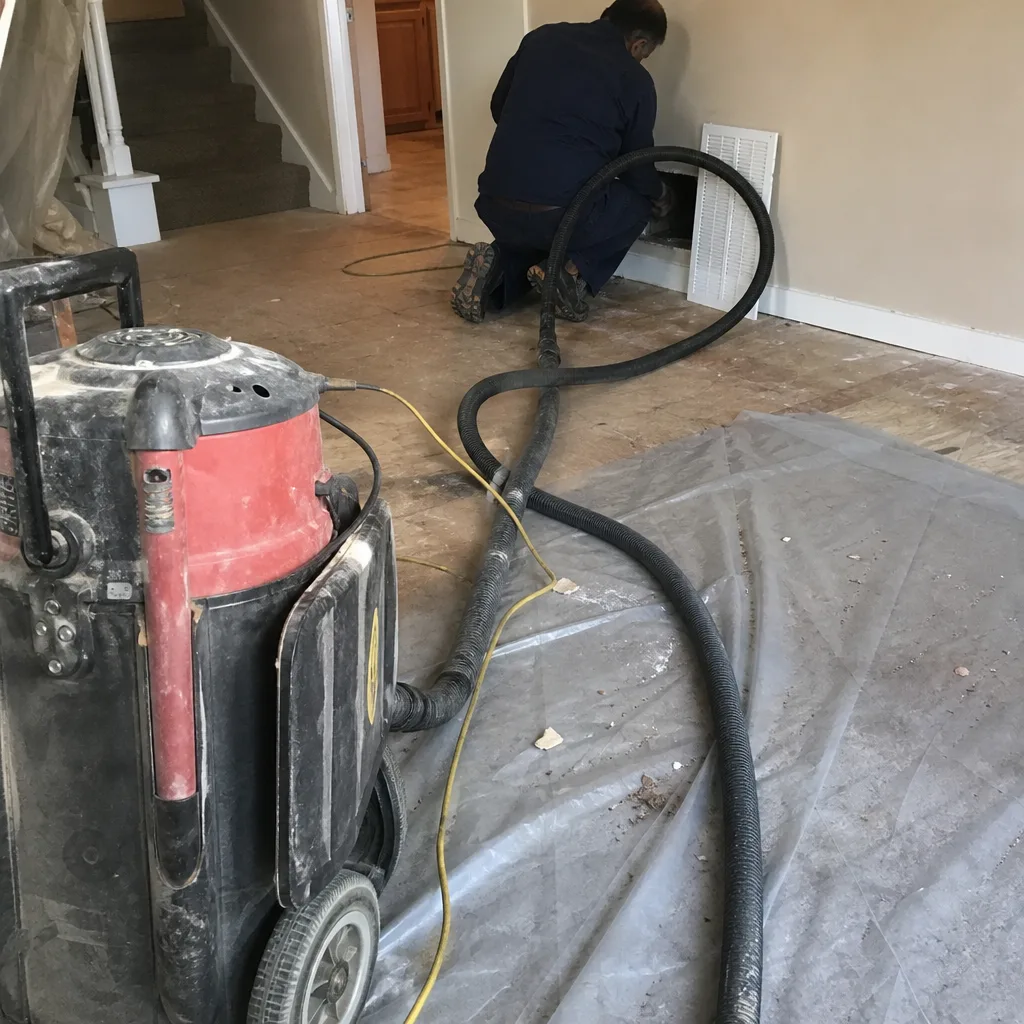
Write down what you find and keep it. When a technician arrives, that sheet gives them a starting point and gives you a way to compare before-and-after results. An honest company won’t mind you handing them your notes. Orange Air Duct Cleaning Co arrives equipped for genuine measurement and containment – Nikro negative-air setup, contact cleaning, and photo documentation of both the before and after. Guardsman-grade surface protection covers furniture and flooring before any equipment runs. Any local pro we connect you with should be state-licensed and insured as their state requires.
What’s Normal, What Isn’t, and How to Tell the Difference
Most of the “warning signs” homeowners worry about turn out to be normal homeowner maintenance items. The useful skill is knowing which patterns are worth a call and which are just the cost of living in a house with a forced-air system.
Here’s the practical line:
- Normal: A faint film of dust on a register grille every couple of weeks. Almost every ducted home in Orange has this.
- Normal: Slight variations in room temperature. A well-balanced system still isn’t perfectly even, and a few degrees difference between floors is expected.
- Normal: One room that cools a little more slowly than the others, especially one above a garage or at the end of a long run.
- Not normal: Dust visibly ejected at blower startup.
- Not normal: A musty smell in one room that gets stronger when the system runs.
- Not normal: Visible mold or dark staining around a register frame, or at the boot where duct meets floor.
- Not normal: Ongoing longer runtimes and uneven cooling that a filter change doesn’t fix.
- Not normal: Dryer dry times that have doubled over six months.
- Not normal: A sudden, strong, and persistent musty smell across the whole house – that one is often the air handler, not the ducts.
When three or more of the “not normal” signs show up at once, the system is doing more than its normal job of moving air. It’s moving contamination. The Abatement Technologies line of equipment we carry exists for the cases that go beyond routine maintenance – visible mold, high allergen loads, or dust from a recent construction project in the same home. Those cases get containment from the start rather than a surface blow-out. Routine maintenance cleanings use the same care, at the scale the job requires. If it turns out your system just needs a good cleaning, that’s the outcome; if it needs more, you’ll hear about it that way and not the other way around. Filtration and air quality upgrades via Honeywell and Aprilaire are available in that same visit if they make sense for your home.
Common Mistakes to Avoid
- Trusting a $99 coupon mailer. The cheap figure in the mailer and the figure at the end of the visit are almost never the same number. The honest version of the conversation is one flat price per system, agreed before work starts, not per-vent pricing after the technician has been on site for an hour.
- Replacing the thermostat to fix uneven cooling. A thermostat change doesn’t do anything for static pressure, flex-duct collapse, or a loaded branch run. If the pattern is uneven rooms, the duct work is the more likely cause.
- Assuming dust on registers means the whole system is dirty. Dust on some registers only points to those branches. Getting the whole system cleaned when only two runs need it costs more than it should and doesn’t deliver more.
- Ignoring one musty room. Small, localized mildew smell in one bedroom is easy to dismiss. It’s also the earliest readable sign of a moisture problem in a branch run, and it’s cheaper to address before it spreads.
- Treating air fresheners as a solution. Masking a musty smell covers the symptom, not the growth. If a room smells off after a full Saturday of air freshener, the cause is in the duct or the boot.
- Believing a blow-and-go. A technician who runs a blower through the return for twenty minutes without contact cleaning the branch runs hasn’t cleaned anything. The debris is still on the duct walls, just loosened.
- Overlooking the dryer vent. Dryer vent lint is a fire hazard, not just an efficiency problem. If the exterior flap has stopped opening fully, that’s the time to inspect, not the next load.
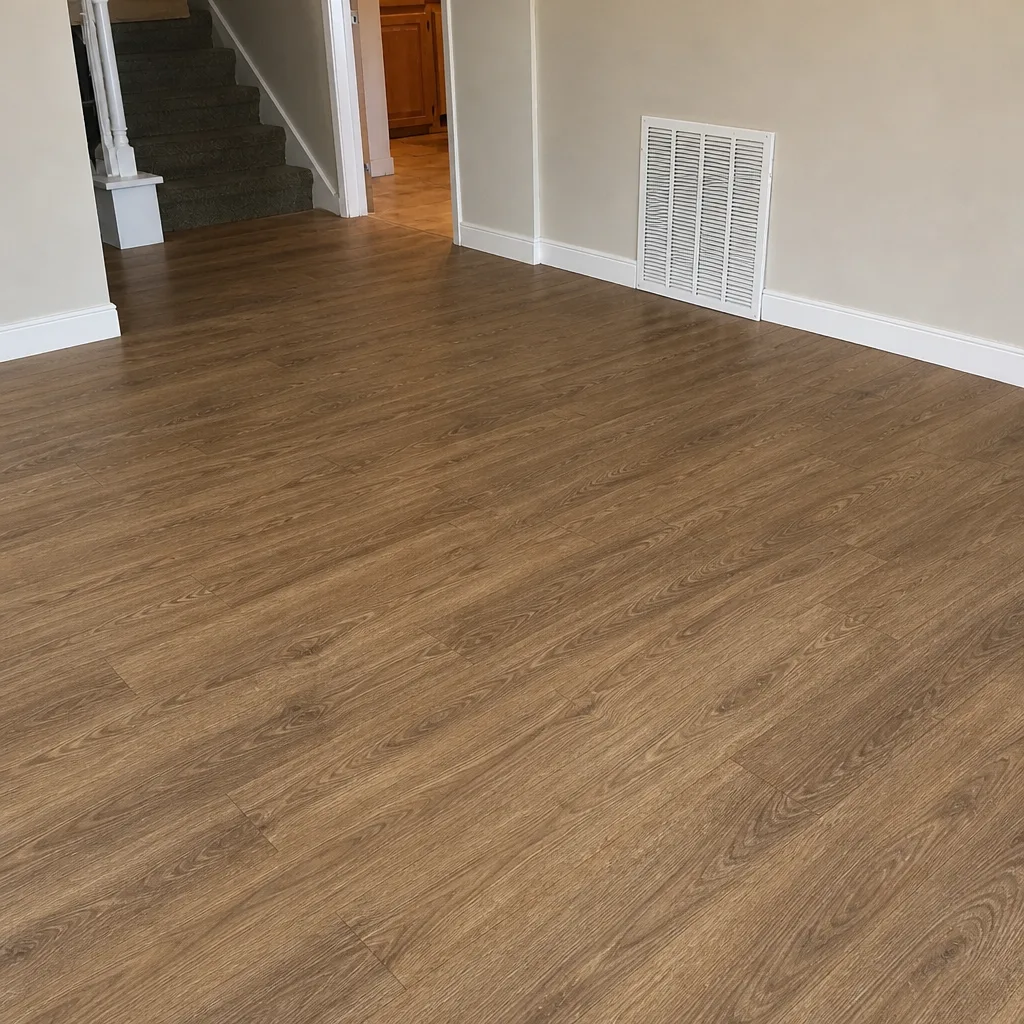
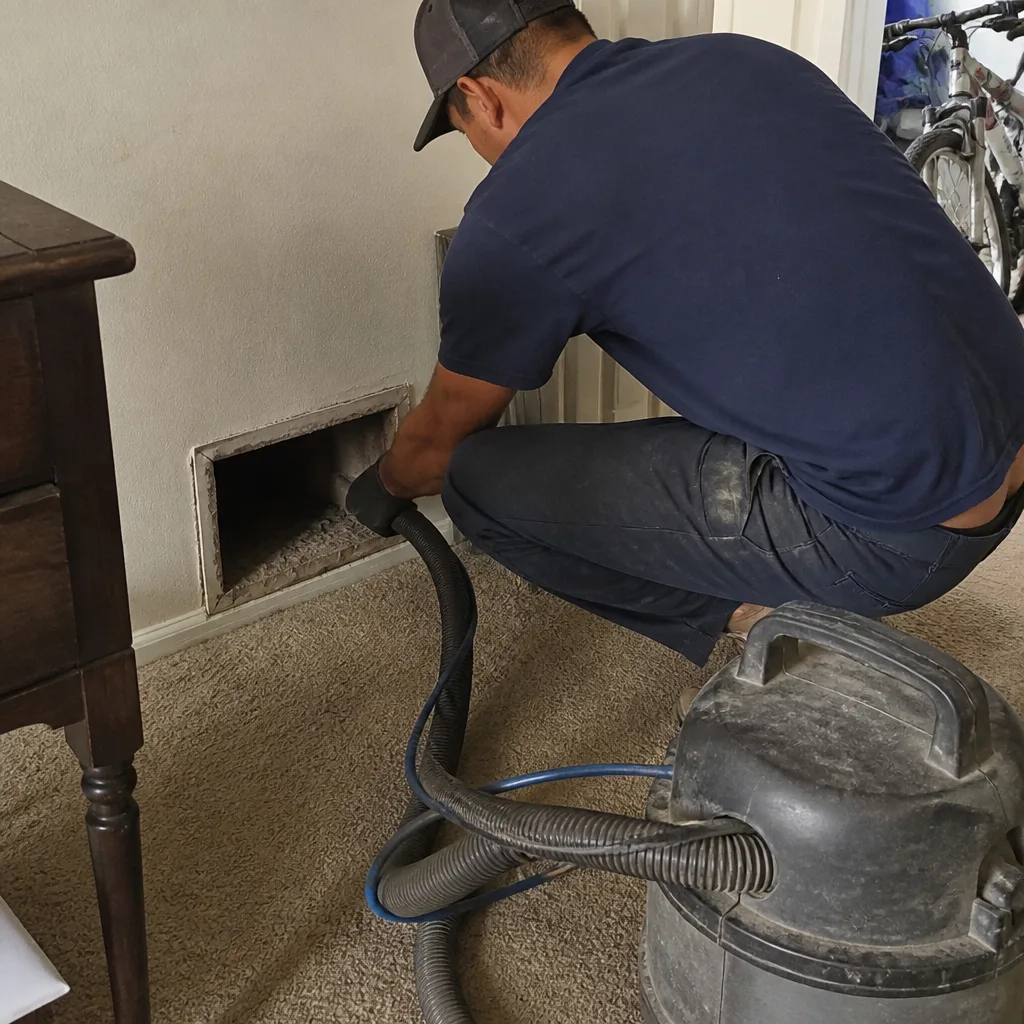
See the difference
 Before
 After
 Before
 After
 Before
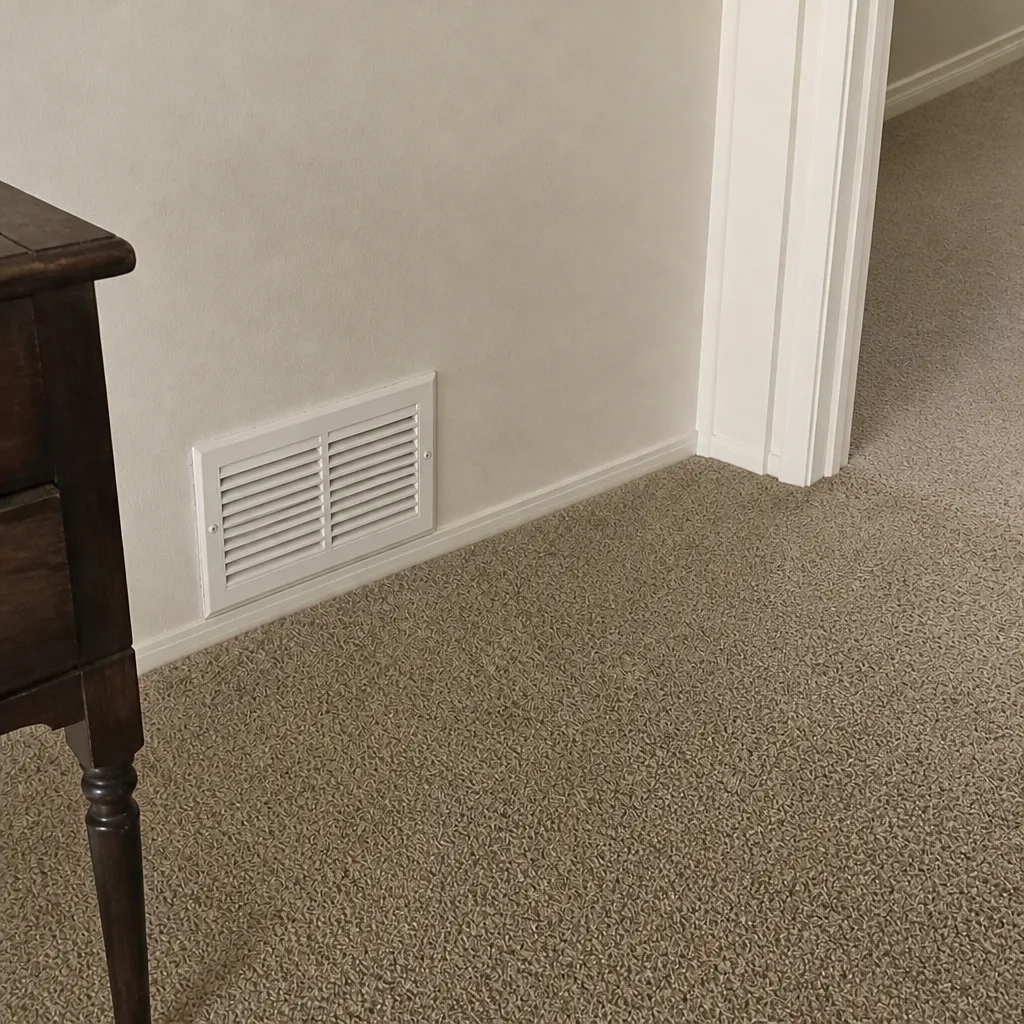 After
When to Call a Professional
Call a professional when the walk-through is showing three or more of the “not normal” signs, or when any single sign is strong enough to interrupt normal life in the house. That includes visible mold near a register, dust ejection at every supply register, a musty smell across multiple rooms, or a dryer vent restriction with the flap no longer opening. On the performance side, a runtime that’s crept up along with a utility bill that rose 10 – 15% over two years is enough to justify a proper assessment, especially if the system hasn’t been inspected in several years.
The safety piece matters too. Duct systems share air across the whole house. Compromised return air, mold growth, or a disconnected flex run pushing attic air into living spaces is a professional assessment problem, not a homeowner wipe-down problem. If you’re unsure, a free estimate settles the question. Orange Air Duct Cleaning Co offers free estimates in Orange – call (855) 658-3734.
Frequently Asked Questions
Air duct cleaning in Orange typically runs from a few hundred dollars for a single-system home up to over a thousand for larger homes with multiple systems and heavy contamination. The honest version is a flat price per system agreed in writing before work starts, based on the size of your home and the condition found on inspection. Cheap figures in mailers are usually per-vent teasers that balloon at the invoice stage. Call (855) 658-3734 for an exact quote – estimates are free.
The very cheap quote is almost always a per-vent number that doesn’t cover the whole system, contact cleaning of the branch runs, or air handler cleanup. Doing the job properly takes equipment and time: Rotobrush contact cleaning of each branch, negative-air containment so dust doesn’t cross into living spaces, and post-cleaning photo documentation of the result. Cheap quotes skip one or more of those steps. Ask what the quote covers, and what’s not included. Call (855) 658-3734 if you want to compare what the number actually buys.
Ask for before-and-after photos of your own ducts, not stock photos. A real clean shows a visible difference inside the branch runs and at the trunk connections, and it’s documented with your home in the frame. Pre-cleaning and post-cleaning photos have become the industry standard for exactly this reason. If a company can’t produce them, that’s the answer. Call (855) 658-3734 to see what photo documentation looks like on a real job – estimates are free.
Most homes with normal dust load and a maintained filter go three to five years between cleanings. Homes with pets, recent remodeling, visible mold, or noticeable symptoms are often on a shorter schedule because the source keeps regenerating. Driving the schedule by condition rather than a calendar number is the useful approach. If you’re not sure where your home sits, an inspection will tell you. Call (855) 658-3734 for an assessment – estimates are free.
Cleaning removes physical debris from the duct surfaces. Sanitizing targets the microbial load left behind and the odors tied to it. They aren’t the same service, and doing one without the other in a home with visible mold or persistent smells leaves the problem partly in place. Our air quality service treats at the source rather than masking with fragrance. Whether you need sanitizing depends on what the inspection finds. Call (855) 658-3734 to talk through what your system probably needs – estimates are free.
They can contribute, especially in homes with visible dust ejection at registers or confirmed mold in a branch run. Ducts are the air pathway, and anything sitting on the duct walls ends up in the air at blower velocity. The honest answer is that symptom changes can have multiple causes and duct condition is one piece of the picture. Getting the ducts inspected and, if needed, cleaned is a reasonable step to take. Call (855) 658-3734 to book an inspection – estimates are free.
The Bottom Line
Duct problems in Orange show themselves through subtle patterns: how dust behaves at blower startup, which rooms smell musty, and whether runtime and utility bills are creeping up. The fifteen-minute walk-through is enough for most homeowners to decide whether a professional inspection makes sense. When you do call someone, insist on a flat price per system agreed before work starts, from a company that can show before-and-after photos of your own ducts and explain what equipment it’s actually using. Trust the pattern, not the coupon mailers. Clean air starts at the source, and the source is your duct system.
Orange Air Duct Cleaning Co works across the full air pathway in a home: air ducts, dryer vents, HVAC units, duct repair and sealing, and air quality treatment. Our technicians have up to 11 years of experience. Free estimates, one flat price per system, and photo documentation of every job. Call (855) 658-3734. We answer 24/7. Fast dispatch from 7am to 7pm, Sunday through Friday.
Written by the team at Orange Air Duct Cleaning Co.