
Last updated November 25, 2026
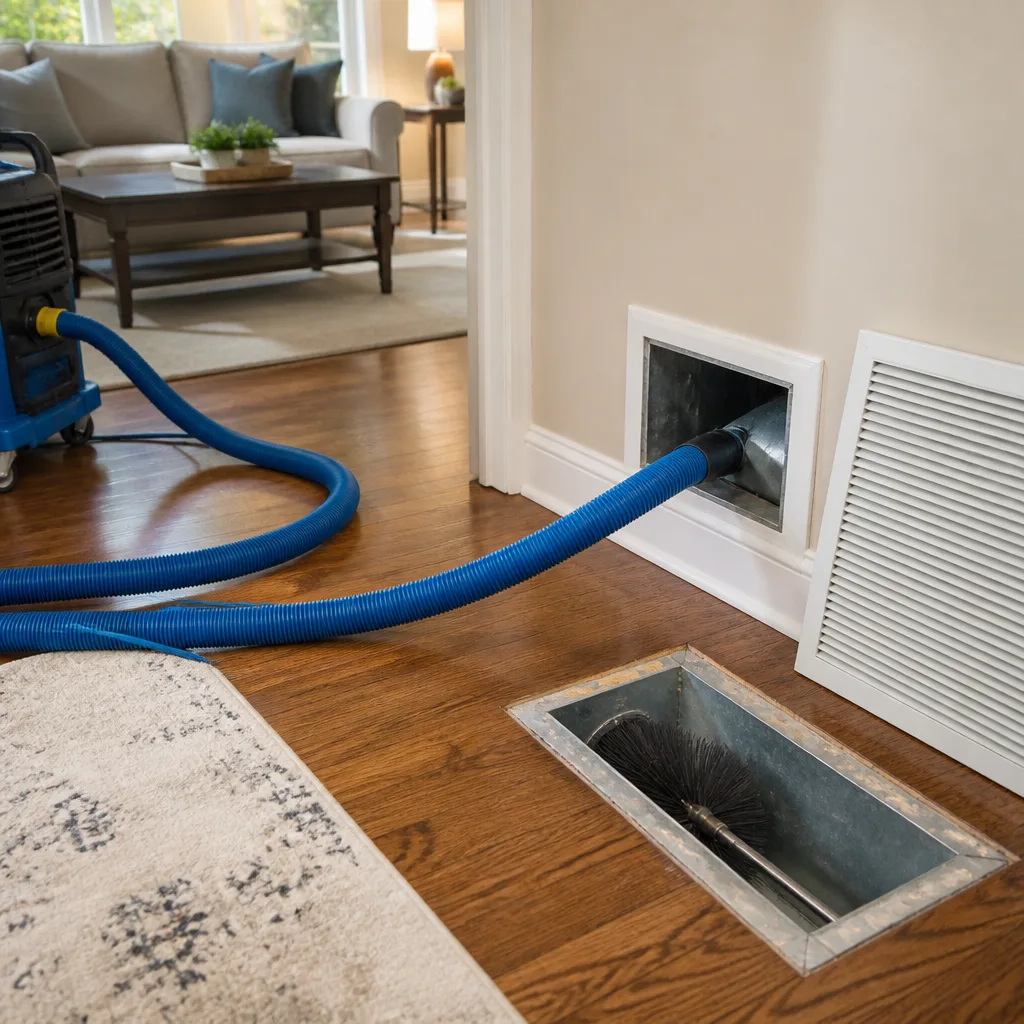 Whole-home duct cleaning
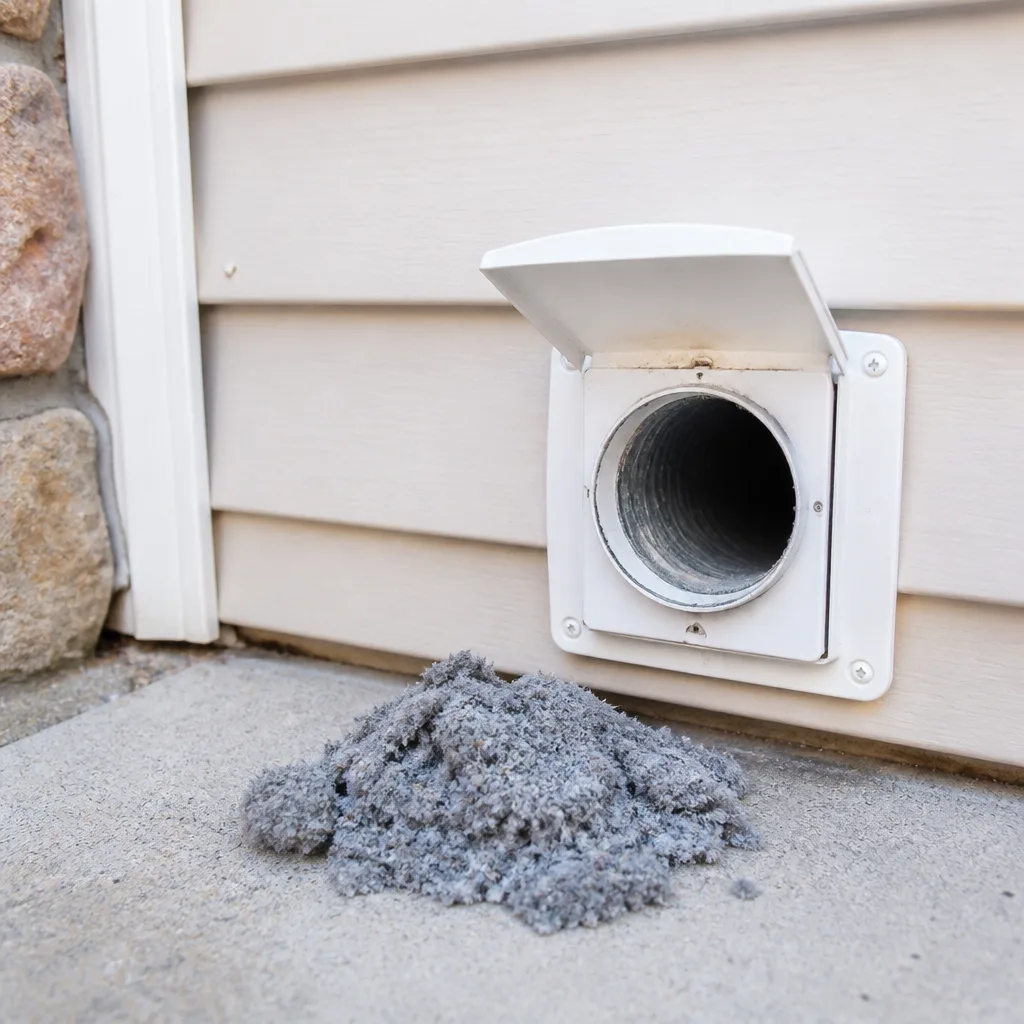 Dryer vent cleaning
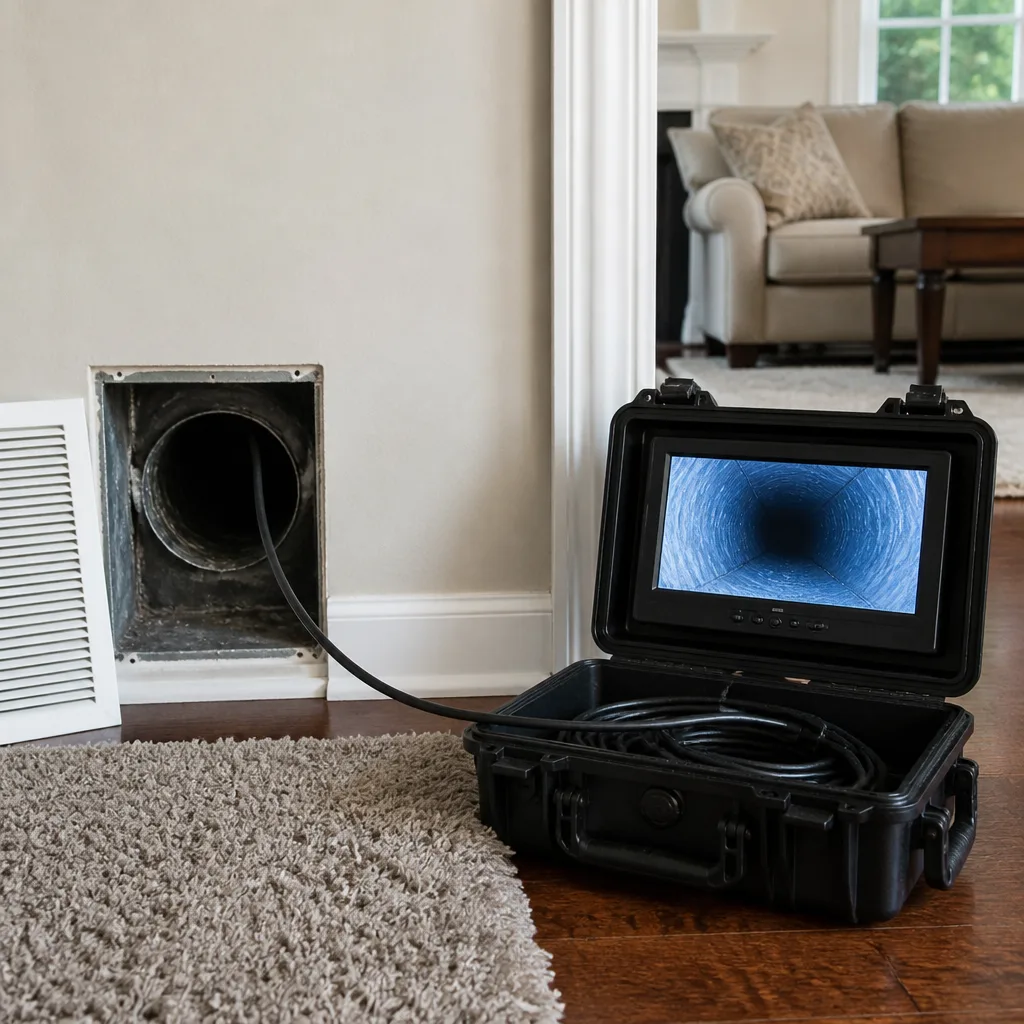 Camera inspection
 Sanitizing & deodorizing
Whole-system duct and dryer vent check with before-and-after photos - you see exactly what came out of your vents
That "$99 whole-house special" is a bait ad - the real number appears once they are in your hallway, or the "clean" is a shop-vac at the register. We photograph the inside of your ducts before and after instead.
DIY vs Professional Air Duct Cleaning: The Orange Homeowner’s Decision Guide
Most homeowners who try to clean their own ducts aren’t careless. They’re capable people who own a shop vac and a ladder, and they’ve watched a video where someone shoves a vacuum hose into a floor register and calls it done. The reason that approach fails has nothing to do with effort. It has to do with physics. We’ll walk you through exactly where the tool gap begins, what you can legitimately handle yourself in an Orange home, and the specific contamination scenarios where a DIY attempt can make indoor air worse instead of better. By the end, you’ll know which side of the line your own duct system sits on.
Quick Answer
A homeowner can and should handle register vacuuming, filter changes, and visual phone-camera inspections at accessible vents. What you cannot do is dislodge contamination bonded to the inside of a sealed duct trunk, because consumer equipment can’t generate the negative pressure required to capture it. Professional cleaning done in Orange uses contact agitation plus simultaneous containment extraction; a shop vac at a floor register does neither.
Styles & brands we work with
- Whole-home duct cleaning
- Dryer vent cleaning
- Camera inspection
- Sanitizing & deodorizing
Table of Contents
- The Physics Difference: Why Suction Alone Doesn’t Clean a Duct
- What DIY Duct Cleaning in Orange Actually Accomplishes
- Bonded Contamination: Why Debris Sticks and What Removes It
- When DIY Goes Backward: Mold, Rodent Debris, and Renovation Dust
- DIY vs Professional: The Real Cost Comparison
- The Hybrid Approach That Works
- How to Vet a Duct Cleaner in Orange
- Common Mistakes to Avoid
The Physics Difference: Why Suction Alone Doesn’t Clean a Duct
A typical wet/dry shop vac generates roughly 40 to 60 cubic feet per minute of suction at the hose end. A truck-mounted negative air machine generates somewhere in the range of 2,000 to 4,000 CFM. That’s not a price difference. It’s a physics difference, and it explains almost everything about why homeowner duct cleaning struggles to move the material that actually matters.
Picture what’s inside a residential duct run in Orange. The trunk line and branch runs form a sealed network. Dust, pollen, pet dander, and skin cells enter through the return and settle along the walls of the sheet metal or ductboard liner. Some of it stays loose. A large portion of it, over time, bonds to the surface through a combination of moisture from your HVAC coil, static charge, and simple compaction as air cycles past it thousands of times a season.
Loose debris will follow airflow. Bonded debris will not. To remove bonded debris, you need two things happening at once:
- Mechanical agitation that breaks the bond between the particulate and the duct surface.
- Simultaneous negative pressure strong enough to capture that material before it redistributes into living space.
Consumer vacuums can’t do either at the scale a duct system requires. A shop vac placed at a register pulls air from whichever nearby path has the least resistance, not from the far end of a thirty-foot branch run. And with no containment machine holding the whole network under negative pressure, any disturbance you create just moves dust from one section of duct to another, or worse, into the room.
Professional contact cleaning with an air duct cleaning rotary brush system reverses this. The brush physically scrubs the duct wall. The vacuum runs at a volume that keeps the entire system under capture while the brush works. That combination is what separates removal from redistribution, and it’s what “verified clean” actually means.
What DIY Duct Cleaning in Orange Actually Accomplishes
Before we talk about what you can’t do, it’s worth being straight about what you can. A homeowner who maintains the accessible parts of their HVAC system between professional cleans does real good, and no legitimate professional should tell you otherwise.
Three tasks are genuinely yours to own:
- Register and grille vacuuming. Pop the supply and return covers off and vacuum the visible surfaces with a brush attachment. You’ll pull dust off the grille face and around the perimeter seals. That dust would otherwise get pulled into the return and travel into the system, so this is meaningful.
- Filter replacement on schedule. A clogged filter restricts airflow, strains the blower, and lets the coil get dirty. Check the filter every one to three months during heavy cooling season. In Orange, where the AC runs much of the year, a filter that looks fine in spring can be loaded by mid-summer.
- Visual inspection with your phone camera. Turn the flashlight on, reach the phone into an accessible register boot, and take photos or a short video. You’re looking for visible dust accumulation, dark staining that suggests moisture, droppings, or any musty smell. This is exactly how you decide whether the duct system needs attention or just isn’t the issue.
Notice what those three items have in common: they all happen at the accessible perimeter of the system. The interior of a sealed trunk, the coil cabinet, and the return plenum are behind panels that most homeowners should not be opening. Anything past the register boot is professional territory, and not only for safety. It’s because the work is only effective with the right equipment.
Bonded Contamination: Why Debris Sticks and What Removes It
Duct contamination is often described as if dust simply sits in the duct like dirt on a floor. It doesn’t. On sheet metal and especially on ductboard liner, particulate binds over time into a layer that has actual adhesion. This is compounded by the southern California climate: warm, dry air keeps the blower moving a lot of volume, and the system cycle of cooling and heating creates just enough condensation on the coil and in the plenum to trap dust in a light film.
Removing that film requires contact. There are two professional approaches:
- Rotary brush contact cleaning. A flexible whip or brush head is fed through the duct run and spun against the wall, breaking the bond. Rotobrush systems are the industry standard for this in residential work, which is why professional duct cleaning services build their process around them.
- Air whip or compressed air agitation. Used in branch runs or hard-to-reach sections where a brush can’t travel cleanly.
In both cases, the agitation has to happen while a large negative air machine holds the whole system under containment. A Nikro negative-air machine is a good example of what this looks like in practice: it’s a sealed vacuum environment applied to the duct network so that every particle loosened by the brush gets captured at the source instead of drifting into the room.
In our experience, the most common failure in “I tried it myself” scenarios is that the homeowner manages to loosen debris in a section of duct, then can’t capture it. The particle count in the room goes up for a day or two, the dust looks like it moved, and the system is no cleaner at the end. That’s the tool gap, in concrete terms.
When DIY Goes Backward: Mold, Rodent Debris, and Renovation Dust
There are three contamination scenarios in Orange homes where DIY isn’t just ineffective. It makes things measurably worse, because disturbance without containment spreads the problem into the air your family breathes.
- Mold inside the HVAC system. Mold requires moisture, and moisture in a duct system comes from the cooling coil and the drain pan. Once microbial growth is established on ductboard liner or the coil cabinet, brushing it loose with consumer tools aerosolizes spores into the supply air. Professional work handles this differently: high-contamination scenarios call for containment-grade equipment (Abatement Technologies systems are built for this) and a sanitizing step that treats the source rather than masking the odor.
- Rodent debris. Attics and crawlspaces in Orange homes are not immune to rodent activity, and duct systems in those spaces can collect droppings and nesting material. Rodent waste carries real health risk when disturbed. If your phone camera shows droppings at a return boot, stop and call a professional. Do not start vacuuming.
- Post-renovation drywall dust. This is the big one. A kitchen or bathroom remodel generates fine gypsum dust that gets pulled into the return and coats the entire duct network. DIY attempts to “vacuum it out” typically redistribute that dust through every supply register in the house. Professional cleaning after renovation should happen with negative pressure in place before anyone runs the AC again.
In all three cases, the correct response is to stop, seal the registers you can seal, and let containment-grade equipment do the work. That’s what our HVAC cleaning scope is built for.
DIY vs Professional: The Real Cost Comparison
The honest comparison isn’t “rental vacuum cost” versus “professional quote.” It’s total cost of the DIY attempt once you account for what you rent, what you spend in time, and the probability of incomplete work that requires professional remediation anyway. We’ll lay out the line items and let you do the math.
The table below reflects typical Orange-area ranges. Every job is quoted per system by written estimate; the estimate, not the range, is your final price.
| Line item | Typical DIY approach | Typical professional approach |
|---|---|---|
| Equipment | Shop vac ($80 – $200 if rented daily, plus hose attachments) | Truck-mounted negative air machine and rotary brush system included in service |
| Time | Half a day to a full day, most of it on a ladder | Scheduled visit, usually a few hours start to finish |
| Supplies | Filters, drop cloths, tape, possibly a second vacuum | Included in service; before-and-after photos provided |
| Containment | None | Nikro negative-air extraction during the entire cleaning |
| Outcome certainty | Unverified; likely partial removal | Verified clean, not just serviced |
| Likely follow-up | Professional remediation needed if contamination was significant | Complete on first pass for standard scenarios |
| Typical all-in cost | Half to two-thirds of a professional job, with no verified result | Quoted per system on written estimate; whole-system ranges in Orange are typically a few hundred dollars for standard residential cleaning |
The math usually breaks for the DIY attempt. You spend most of the professional price in equipment and hours, and you end up with a system that may or may not be cleaner, with no way to prove either outcome. If you notice the same dust returning within a few weeks, that’s not because “it comes back.” It’s because it never left.
We give free estimates in Orange with a written per-system price, agreed before any work starts, so you’re comparing a fixed number to a rolling cost. Call (855) 658-3734 to get that number.
The Hybrid Approach That Works
Here’s what we’d tell a friend. Full-system professional cleaning once every few years, with disciplined homeowner maintenance in between, is the pattern that actually controls indoor air quality in an Orange home. The homeowner half extends the interval and improves the result; the professional half handles the part the homeowner genuinely cannot do.
Your side of the hybrid:
- Vacuum registers monthly during heavy cooling season. A brush attachment on the vacuum, a few seconds per register. This removes the surface dust that would otherwise slide into the return.
- Change filters on a real schedule. In Orange’s climate the AC runs a lot, and a filter that’s “clean enough” in April is often loaded by July. Check every one to three months during peak cooling. High-MERV filters help, but be aware that an extremely high-MERV filter can restrict airflow in an under-sized return. Ask a professional before upgrading if your static pressure isn’t already dialed in.
- Do a phone-camera inspection once or twice a year. Same drop photos, front and back. If you notice dark staining, smell mustiness, or see droppings, book a professional visit rather than trying to scrub.
- Call a professional after any renovation, mold event, or rodent sighting. These are the scenarios where DIY can’t help and can hurt.
And here’s what we can add to the system at the same service visit, if the inspection shows your existing filtration is undersized: filtration upgrades with Honeywell or Aprilaire components. That’s a service-visit decision, not a separate project, and it directly reduces the amount of particulate that ever reaches the duct walls. It’s the highest-impact structural improvement most Orange homes can make.
How to Vet a Duct Cleaner in Orange
If you’ve decided to hire out, the vetting matters more than the quote. Duct cleaning is a category with real bait-and-switch patterns, and the questions below surface them quickly.
- Ask what equipment they’ll bring. If the answer is a portable shop vac, you’re paying for the same approach you could do yourself. If it’s a truck-mounted or high-CFM negative air system with rotary brush contact cleaning, that’s the right tool set.
- Ask whether they’ll provide before-and-after photos of your own ducts. Not stock photos, not a generic brochure. Photos of your registers and your plenum, taken at the time of the work.
- Ask for a written per-system price before work starts. Not a per-vent price. Not a teaser number. A single flat number for the whole system.
- Ask whether containment is part of the job. A professional answer describes negative pressure and how it protects the living space.
- Ask about the local pro’s licensing and insurance. The local pro is licensed and insured as their state requires. Verify it.
- Ask about surface protection. Our work follows Guardsman-grade surface protection standards so that your floors, trim, and furniture are protected during service. If a company can’t tell you what they do to protect your property, that’s a data point.
Any legitimate operator answers all of these without hesitation. If any of them get vague, that’s your answer.
Dryer Vents: The One Duct You Should Never DIY
Air ducts are the headline topic, but this guide wouldn’t be complete without naming the other duct in your home. Your dryer vent is a duct. It’s also the highest fire-risk duct in a home, and DIY “cleaning” of a dryer vent is a bad idea not because of equipment physics but because of lint behavior under real use.
Lint accumulates in layers on vent walls and can compact into a dense mat that a shop vac hose cannot dislodge without proper brush agitation and capture. Restriction from lint buildup slows airflow, overheats the dryer, and in the worst case feeds an ignition source. A professional dryer vent cleaning is one of the cheapest preventive services you can schedule, and it’s the kind of thing you want done right the first time. Don’t use a shop vac hose on a short ladder and call it done.
If you’re already booking professional air duct service, ask about the dryer vent at the same visit. It’s the same equipment family, and it’s one call, full system.
Common Mistakes to Avoid
- Vacuuming a register while the HVAC fan is running. You’re fighting the system and pushing loose dust back into the return. Turn the system to fan “off” before you vacuum anything.
- Using a shop vac on a suspected mold-contamination duct. You’ll aerosolize spores into your living space. If the camera shows dark staining or you smell mustiness, stop and call a professional.
- Assuming the 99-cent-a-click air duct special is a real quote. A per-vent teaser price that turns into a much larger invoice once the technician is on site is the most common bait-and-switch in this trade. Ask for a flat price for the whole system in writing.
- Skipping a phone-camera inspection after renovation. Drywall dust is the number one post-renovation duct contaminant, and it’s easy to redistribute by running the AC the same week the contractors leave. Book a professional check before you do.
- Upgrading to a very high-MERV filter without asking about static pressure. More filtration isn’t always better if the return is undersized. Ask before you swap.
- Believing that “the dust comes back no matter what.” It doesn’t, when the job was done right the first time. Recurring dust is usually a sign that the earlier cleaning was surface-only.
- Overlooking the dryer vent because the AC is the visible system. Lint-loaded dryer vents are a fire risk and a very common oversight in Orange homes.
See the difference
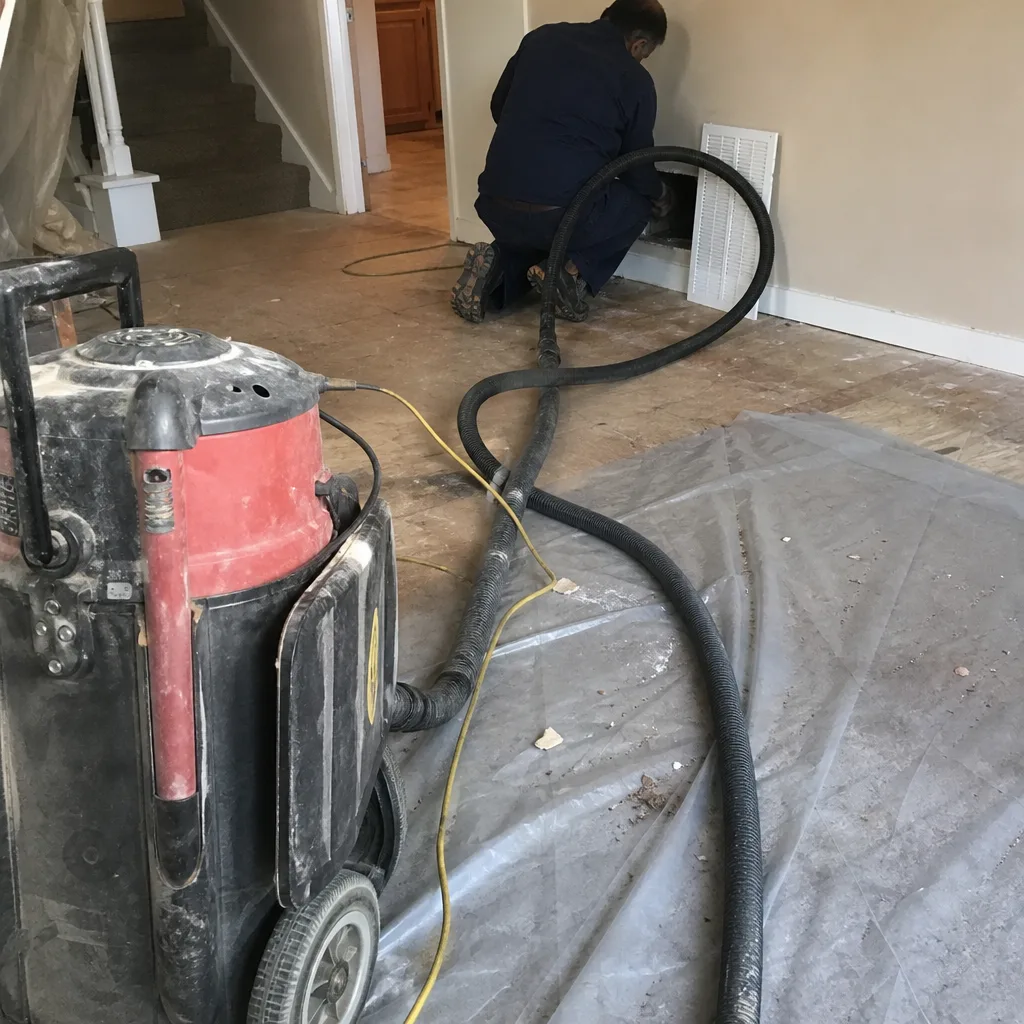 Before
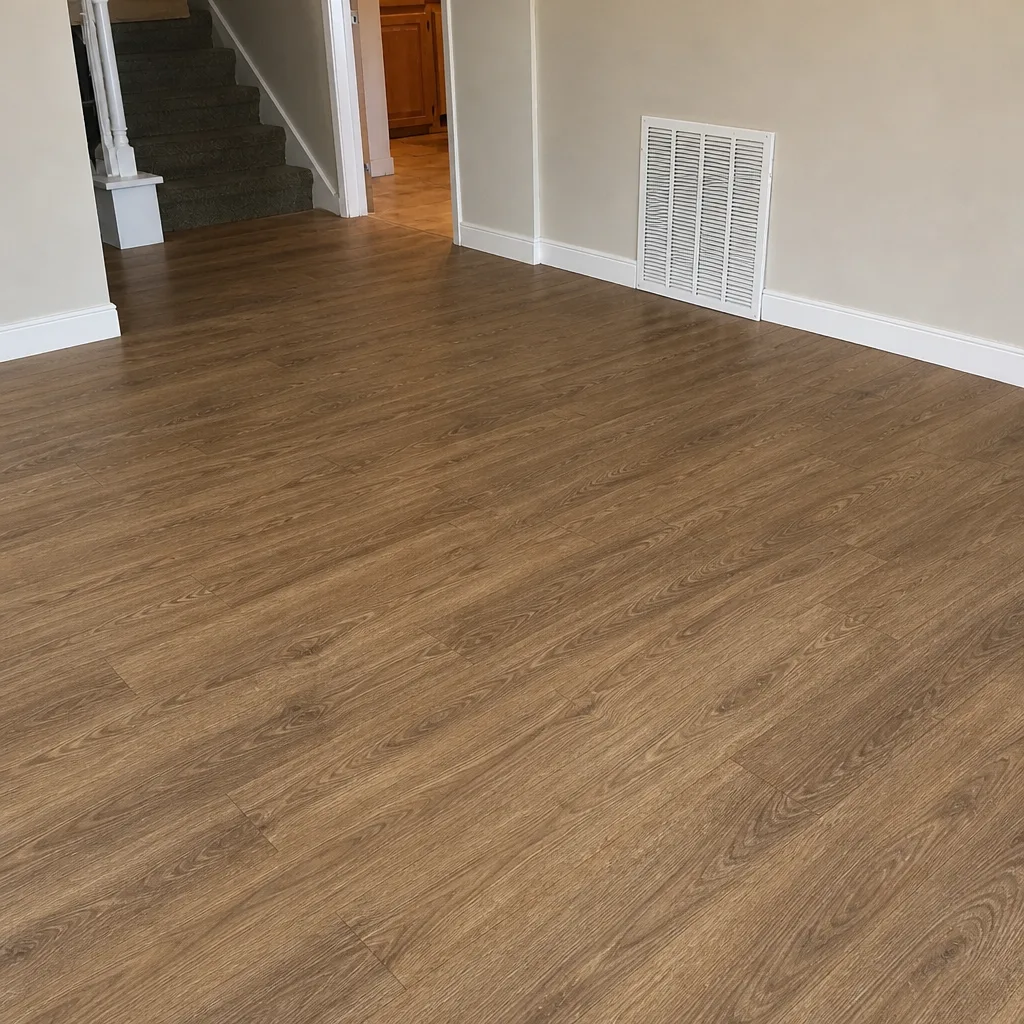 After
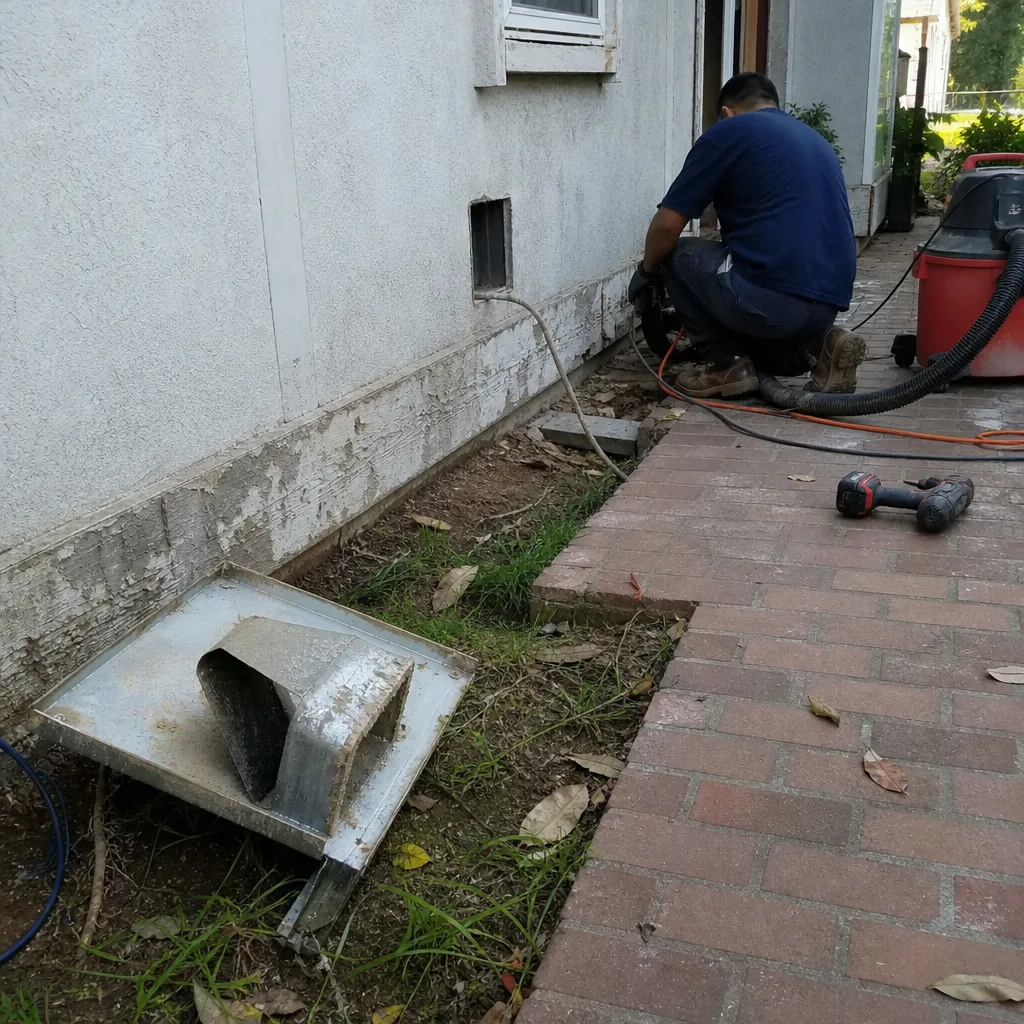 Before
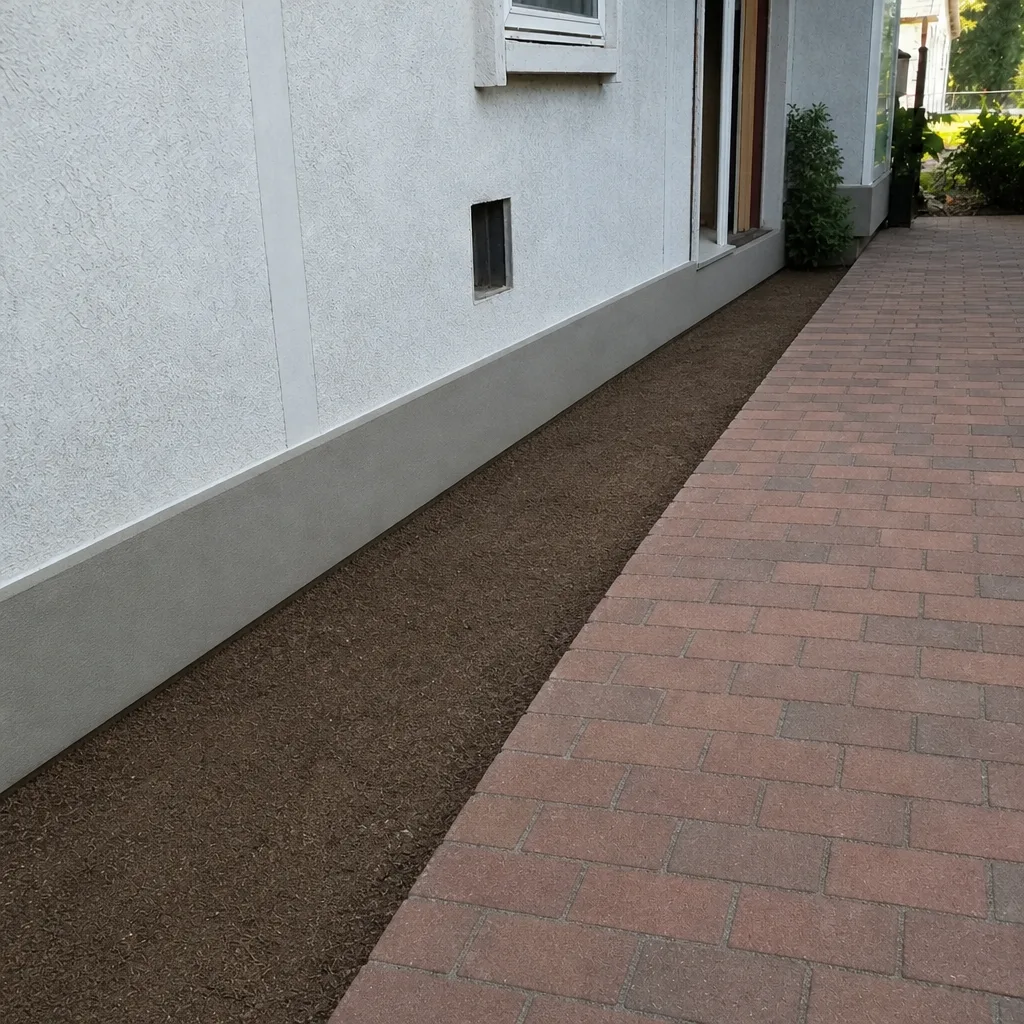 After
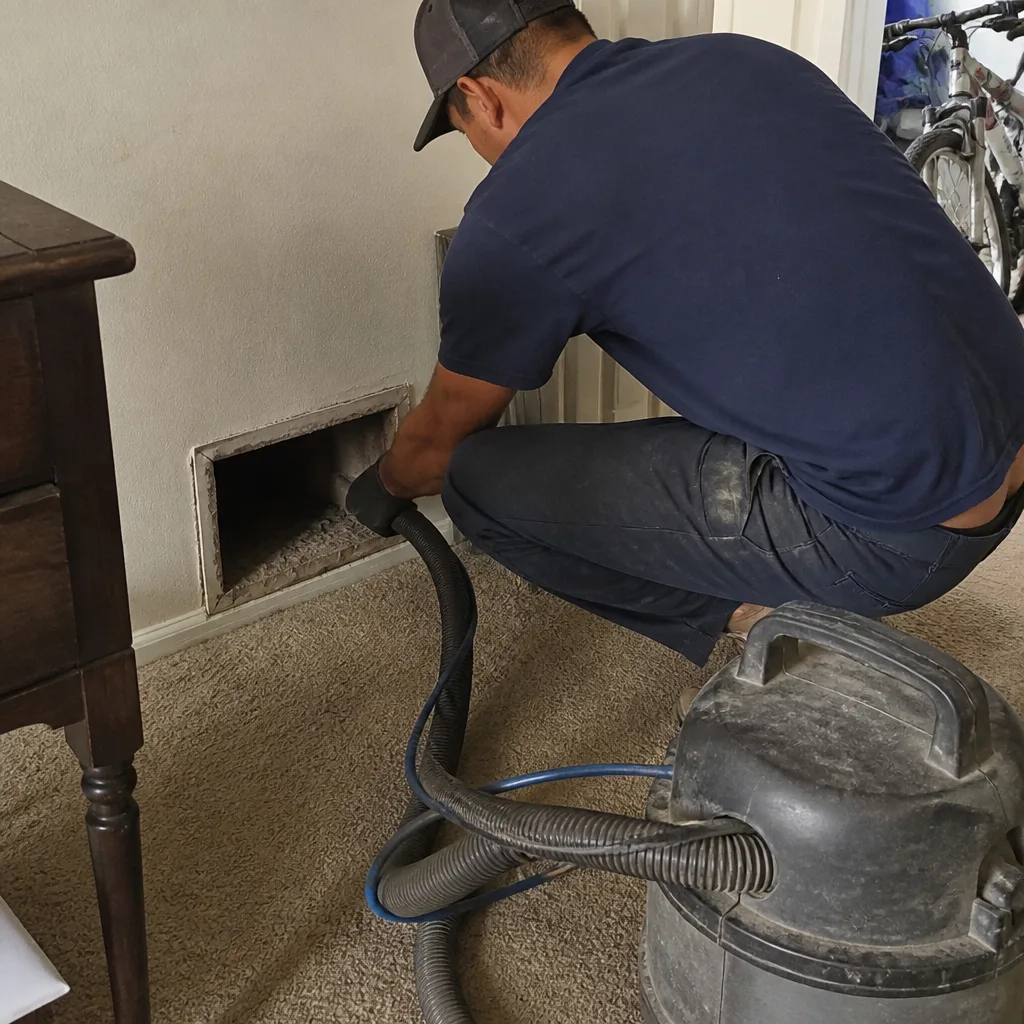 Before
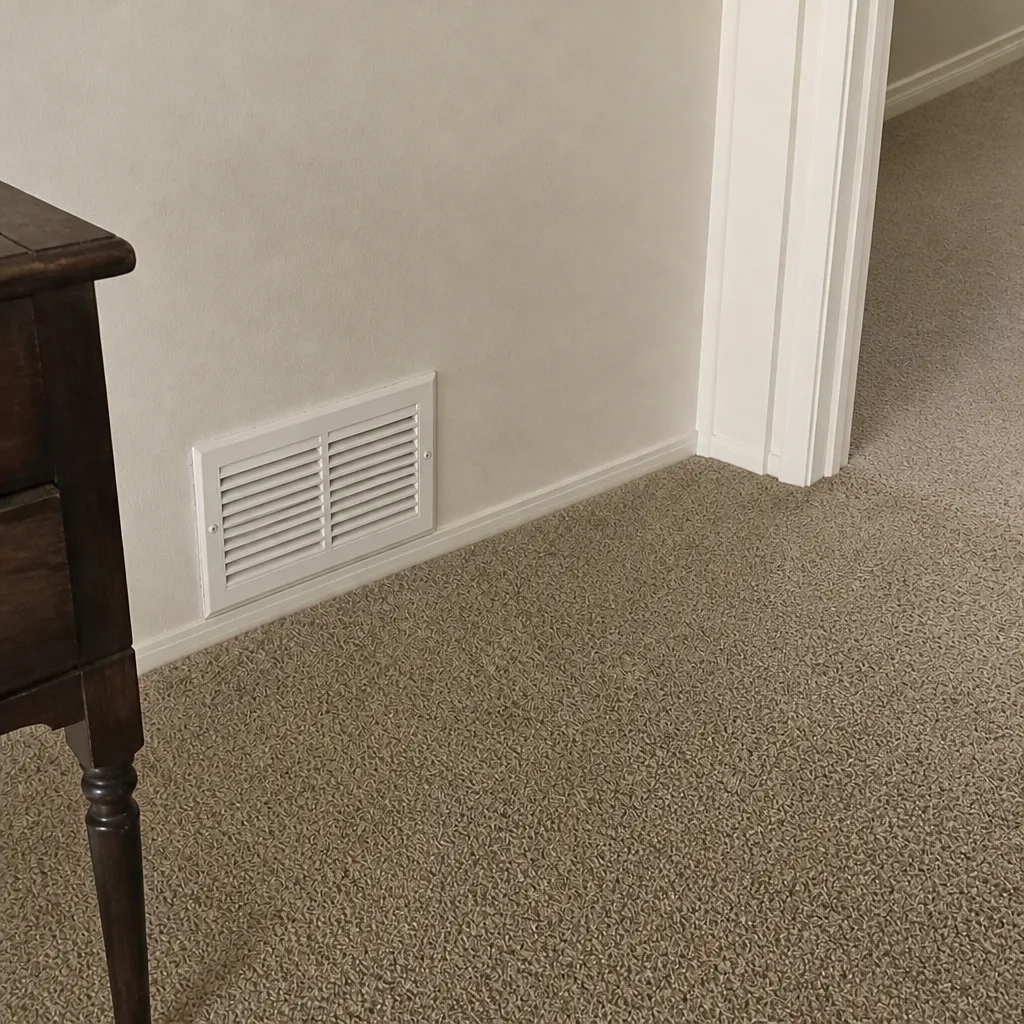 After
When to Call a Professional
You call a professional when the question isn’t “can I vacuum this?” but “can I safely and verifiably remove this?” That’s any registered visible mold, any rodent droppings at a register or return, any recent renovation, any musty smell that returns after filter changes, and any time the same dust is back inside a few weeks. Those are not jobs for a shop vac. Containment-grade equipment and proper sanitizing belong in the plan, and no homeowner-level tool can substitute for either.
If you’re in Orange and you want a written per-system price before you decide, Orange Air Duct Cleaning Co offers free estimates in Orange. Call (855) 658-3734. We answer 24/7, and we dispatch from 7am to 7pm, Sunday through Friday. Our technicians have up to 11 years of experience, and the estimate is set by what your system actually needs, not what fits into a coupon.
Frequently Asked Questions
No. A shop vac generates roughly 40 to 60 CFM of suction, while professional truck-mounted negative air systems run in the thousands of CFM. That gap isn’t about price, it’s about physics: without enough negative pressure and contact agitation, bonded contamination in a sealed duct trunk doesn’t come out, and what does come loose can end up in your living space instead.
Typical residential air duct cleaning in Orange runs in the hundreds of dollars per system depending on the number of trunks and returns, contamination level, and whether repair, sealing, or sanitizing is added. The important part is that you get a single flat price for the whole system in writing before work starts, not a per-vent number. Call (855) 658-3734 for a free estimate; the written range is your actual price.
Because they’re not quoting the same scope. The low advertised numbers in this trade are usually a per-vent teaser that expands once the technician is on site with tools already unloaded. The good questions to ask any company: what equipment will you bring, will you show me before-and-after photos of my own ducts, and is the per-system price in writing. If any of those answers gets vague, that’s the reason the quote is low.
Photos of your own registers, plenum, and coil cabinet before and after, plus a written per-system scope that describes what was cleaned. Verified clean means you can see the result, not just receive a receipt. Ask any Orange air duct cleaning company to show you the process on your own system.
For most homes, professional full-system cleaning every three to five years is a reasonable interval, with register vacuuming and filter maintenance on a much shorter cycle in between. Homes with pets, recent renovations, allergy suffers, or visible contamination should go shorter. If the AC runs hard through the year, treat the interval as a floor, not a ceiling.
Yes, and you should. Vacuum registers monthly during heavy cooling season, change filters every one to three months, and do a phone-camera inspection twice a year. Those three habits extend the interval between professional cleans and reduce the amount of particulate that reaches the duct walls in the first place. They don’t replace the professional clean, but they make it last longer.
The Bottom Line
The gap between DIY and professional duct cleaning isn’t effort or motivation. It’s the physics of moving contamination out of a sealed duct network, and consumer tools can’t close it. A homeowner who vacuums registers, keeps filters fresh, and runs a phone-camera inspection on a schedule does real good by their system. A homeowner who tries to address interior duct contamination, mold, rodent debris, or post-renovation dust with a shop vac risks redistributing the problem into the rooms their family breathes in.
The hybrid model works: you maintain the perimeter, a professional handles the interior, and you verify the job with before-and-after photos on your own system. That’s what we do at Orange Air Duct Cleaning Co, and it’s what “verified clean, not just serviced” means in an Orange home. One call covers the full air pathway: ducts, dryer vent, HVAC unit, duct integrity, and air quality treatment. Clean air starts at the source.
Call (855) 658-3734 for a free estimate. We answer 24/7. Fast dispatch from 7am to 7pm, Sunday through Friday. One flat price per system, agreed before work starts, with before-and-after photos of your own ducts. The local pro is licensed and insured as their state requires, and we can work with Honeywell and Aprilaire filtration upgrades on the same visit if your system needs them.
Written by the team at Orange Air Duct Cleaning Co.